
Overview
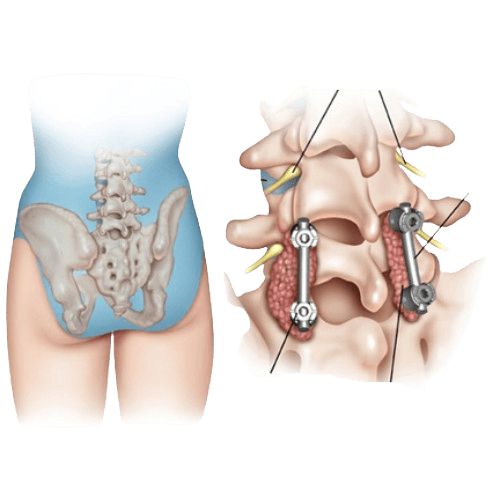
Transforaminal Lumbar Interbody Fusion (TLIF) is a minimally invasive spinal fusion technique that stabilizes the lumbar spine by placing bone grafts and implants through a posterior approach.
This procedure relieves pain caused by degenerative disc disease, spondylolisthesis, or spinal instability, while maintaining alignment and preserving neural structures.
Indications and Patient Assessment
TLIF is recommended for patients with lumbar spine instability, chronic pain, or neurological deficits. Imaging and clinical evaluation determine suitability.
- Degenerative disc disease causing chronic pain
- Spondylolisthesis: Slippage of one vertebra over another
- Spinal stenosis or nerve compression requiring stabilization
Surgical Procedure and Technique
The surgeon removes the degenerated disc and inserts a bone graft and interbody cage through the transforaminal corridor. Screws and rods secure the vertebrae.
Recovery and Postoperative Care
Patients begin mobilization soon after surgery. Pain control, physiotherapy, and gradual return to activity promote fusion and recovery.
Outcomes and Benefits
TLIF provides significant pain relief, improved spinal stability, and preservation of neural function. Most patients resume daily activities within weeks.

B.U.M.S, M.D. (NAT) | Reg No. 9153 | Ex. Secretary & Treasurer, N.I.M.A.
Qualified healthcare professional in Unani and Naturopathic medicine with deep expertise in traditional healthcare systems, patient-centered clinical care, and medical content review.