Overview
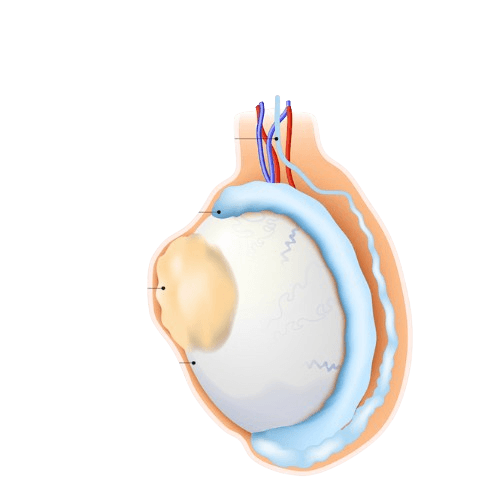
Testicular cancer arises when abnormal cells grow uncontrollably in one or both testicles.
It typically affects men between the ages of 15 and 40 and is among the most curable cancers when detected early.
CureU Healthcare offers comprehensive evaluation, advanced surgical options, and fertility-preserving treatment plans.
Overview And Clinical Background
Testicular cancer originates from germ cells in the testis, most often presenting as a painless lump or swelling.
It can spread to nearby lymph nodes or distant organs if untreated.
- Types:: Includes seminomas and non-seminomas, differing in growth rate and treatment approach.
- This cancer has excellent prognosis with modern therapy, even in advanced stages.
- Common age group:: Most cases occur in men under 40, making early screening crucial.
Symptoms, Signs And Presentation
Most patients notice a firm mass or swelling in the testicle.
Occasionally, pain, heaviness, or lower abdominal discomfort may occur.
- Lump in testicle:: Usually painless but firm and persistent.
- Scrotal heaviness or dull ache in lower abdomen or groin.
- Red flag:: Rapid enlargement or new-onset pain should prompt urgent medical review.
Diagnosis Methods And Investigations
Imaging And Laboratory Tests
Diagnosis begins with physical exam, followed by scrotal ultrasound and blood tumor markers.
CT scans assess spread when needed.
- Imaging:: Ultrasound helps differentiate solid from cystic masses, confirming malignancy suspicion.
- Lab tests:: AFP, β-hCG, and LDH levels aid classification and monitoring.
- CT or MRI may be performed to evaluate metastasis and treatment response.
Treatment Options And Surgical Techniques
Treatment involves surgical removal of the affected testicle, often followed by chemotherapy or radiotherapy depending on type and stage.
- Surgery:: Radical inguinal orchiectomy is standard to remove the diseased testis safely.
- Chemotherapy:: Used when cancer has spread, offering excellent cure rates.
- Surveillance programs are also common for early-stage tumors to reduce overtreatment.
Recovery, Risks And Prognosis
Most patients recover quickly after surgery.
Fertility preservation is possible, and survival rates exceed 95% in localized cases.
Why Choose Us
CureU Healthcare provides multidisciplinary urologic oncology care — blending surgery, imaging, and personalized follow-up for lasting recovery.
Conclusion
Testicular cancer is one of the most curable malignancies with timely diagnosis and modern therapy.
Early action saves lives.

B.U.M.S, M.D. (NAT) | Reg No. 9153 | Ex. Secretary & Treasurer, N.I.M.A.
Qualified healthcare professional in Unani and Naturopathic medicine with deep expertise in traditional healthcare systems, patient-centered clinical care, and medical content review.