Overview
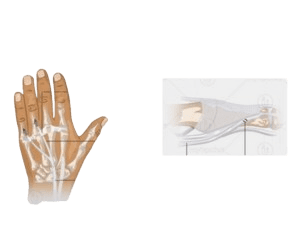
The tendon is a hard, strong cord that connects muscles to bones or muscles that are attached to bone. In addition, tendons attached to the muscles help to perform the movements of the joints. Furthermore, not only one or two, but there are forty different muscles in the forearm and hand. Some of these muscles are layered upon each other. However, after ruptured tendons or injury, these muscles do not move properly. In such cases, tendon transfer surgery is performed to transfer the non-working muscles to replace the tendon with working muscles.
For example, after an injury with a broken wrist, the tendon to the thumb that performs the movement of a thumbs-up can be broken. In some cases, the two ends are severely damaged and cannot be stitched back together. During the surgery, the surgeon can transfer the index finger tendons to the thumb, which recreates the action of thumbs up. This means it will allow the fingers to move again in the same position.
Causes of tendon transfer
Causes or tendon transfer or tendon transfer is useful in restoring function after loss of muscle or tendon due to:
- Nerve injury (cut, stretched or torn nerve)
- Muscles injury (trauma, rheumatoid arthritis)
- Neuromuscular disorder (stroke, traumatic brain injuries, spinal muscle, cerebral palsy, atrophy)
- Birth defects ( born without certain muscle function)
Procedure of tendon transfer
Before making the incision, the very first step is to give anesthesia to make the patient feel in a deep sleep state.
The type of anesthesia depends upon the severity of the condition, this will be decided by the surgeon.
The surgeon makes incisions as much as required in the skin. After diagnosing the extra muscle the surgeon removes the muscle that is not in a working condition and stitches back. Sometimes only a single tendon transfer is needed at a time.
After moving the tendons, the surgeon closed the skin with stitches and bandages.
Risk of tendon transfer
Some of the common risk associated with tendon transfer include:
- Infection
- Bleeding
- Injury to nearby nerves
- Damage to tendons or blood vessels
- Stiffness
- Weakness
- Rupture of the transfer
Needs of Tendon Transfer Surgery
Tendon transfer surgery in India is commonly used to treat different conditions. It is particularly required when muscle function is lost due to nerve injury. In cases of nerve injury, if the nerve is severely damaged and can't be repaired, then the nerve stops sending signals to the particular muscle. As a result, those muscles become paralyzed and their function is lost. Some of the common nerve injuries that can be treated with tendon transfer surgery include spinal cord injury, radial nerve injury, ulnar nerve injury, or median nerve injury.
Additionally, tendon transfer is also required when a muscle has ruptured or been torn and cannot be repaired. Some of the common injuries that can be treated with tendon transfer surgery include rheumatoid arthritis or fractures. Moreover, lacerations that cannot be fixed after injury can also be treated with tendon transfer surgery.
Cost of tendon transfer surgery in India
The cost of tendon transfer surgery in India is affordable and less expensive compared to other nations. The cost of medical treatment in India is lower due to various factors such as lower labor cost, affordable healthcare medical facilities, and a larger number of skilled medical professionals. Also the healthcare market is very competitive, so keeping the prices lower makes it more beneficial but without compromising the quality of the care.
Some of the more common factors include the type of surgery, stay at the hospital, facilities of stay, expertise of the surgeon, and more.
Summary
Tendon transfer surgery is performed to transfer the non-working muscles to replace the tendon with working muscles.
The tendon is a hard, strong cord that connects muscles to bones or muscles that are attached to bone.
Furthermore, not only one or two, but there are forty different muscles in the forearm and hand. Some of these muscles are layered upon each other.

B.U.M.S, M.D. (NAT) | Reg No. 9153 | Ex. Secretary & Treasurer, N.I.M.A.
Qualified healthcare professional in Unani and Naturopathic medicine with deep expertise in traditional healthcare systems, patient-centered clinical care, and medical content review.