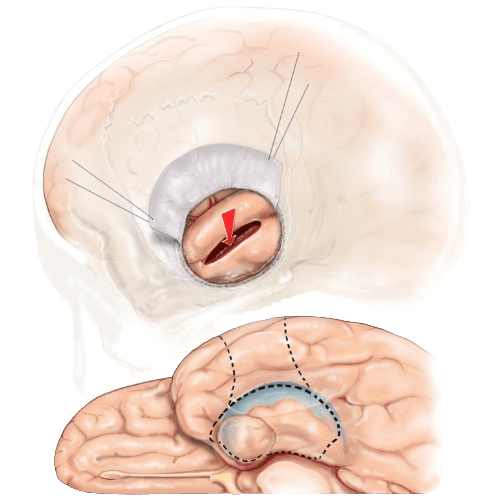
Overview
Temporal Lobectomy involves removing a portion of the temporal lobe to control seizures in patients with refractory epilepsy.
This surgery is considered when medication fails to prevent frequent or severe seizures. Advanced imaging and EEG monitoring help identify the seizure focus before surgery.
Indications and Pre-Surgical Evaluation
Temporal lobectomy is primarily indicated for patients with temporal lobe epilepsy resistant to medications. Pre-surgical evaluation includes MRI, video EEG, and neuropsychological testing.
- Refractory temporal lobe epilepsy
- Frequent or severe seizures: Causing disability or safety risks
- Localized abnormal brain activity on EEG
Surgical Technique and Procedure
The surgeon removes the seizure-causing portion of the temporal lobe while preserving essential areas for memory and language. Microsurgical techniques minimize brain trauma.
Postoperative Recovery and Monitoring
Patients typically stay in hospital 3–5 days. Neurological monitoring and medications are continued, and follow-up imaging ensures complete removal of seizure focus.
Outcomes and Long-Term Benefits
Many patients experience significant reduction or complete cessation of seizures. Cognitive and functional outcomes are generally preserved when surgery is carefully planned.