Overview
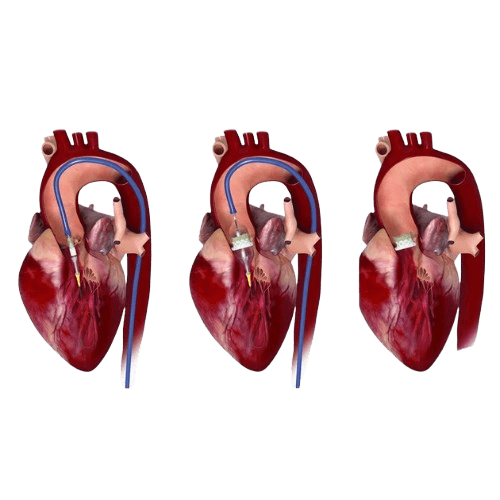
Transcatheter Aortic Valve Implantation (TAVI), also known as Transcatheter Aortic Valve Replacement (TAVR), is a minimally invasive heart procedure used to replace a narrowed aortic valve that fails to open properly, a condition known as aortic stenosis.
Unlike traditional open-heart surgery, TAVI/TAVR is performed through small incisions using a catheter, making it suitable for patients at high surgical risk or those not eligible for conventional surgery.
Why is TAVI / TAVR Needed?
Severe aortic stenosis restricts blood flow from the heart to the rest of the body. This can cause:
- Chest pain (angina)
- Shortness of breath
- Fatigue or fainting spells
- Heart failure
- Increased risk of sudden cardiac death
How is TAVI / TAVR Performed?
The procedure is carried out by a heart team (cardiologists and cardiac surgeons) and involves:
- Catheter insertion: Usually through the femoral artery in the groin.
- Valve positioning: A replacement valve is guided to the heart using the catheter.
- Valve deployment: The new valve is expanded (via balloon or self-expansion) inside the diseased valve.
- Restoration of blood flow: The new valve starts functioning immediately.
Benefits of TAVI / TAVR
- Minimally invasive, no need for open-heart surgery
- Shorter hospital stay and quicker recovery
- Significant symptom relief (breathing, chest pain, fatigue)
- Improved quality of life and survival rates
- Option for elderly and high-risk patients
Risks and Complications
While TAVI/TAVR is safe, possible risks include:
- Vascular complications (bleeding, artery injury)
- Stroke
- Heart rhythm problems (sometimes requiring a pacemaker)
- Valve leakage (paravalvular regurgitation)
- Rare risk of death
Recovery After TAVI / TAVR
Recovery is usually much faster compared to open surgery:
- Hospital stay of 3-5 days on average
- Return to normal activities within 1-2 weeks
- Medications such as blood thinners prescribed for some time
- Regular follow-ups and echocardiograms to monitor valve function
- Heart-healthy lifestyle with diet and exercise
Conclusion
TAVI / TAVR is a groundbreaking, minimally invasive treatment for severe aortic stenosis. It offers a safe and effective alternative to open-heart surgery, especially for elderly patients or those at high surgical risk. At CureU Healthcare, we provide world-class expertise in structural heart interventions, ensuring better outcomes and faster recovery for our patients.

