
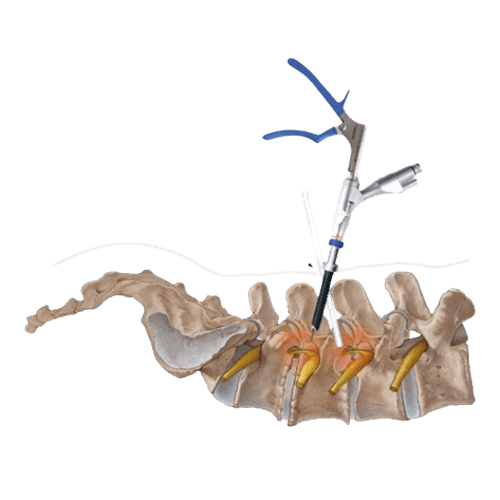
Overview
Spinal Endoscopic Surgery uses small incisions and a camera-equipped endoscope to treat spinal conditions like herniated discs or stenosis.
This minimally invasive technique reduces tissue damage, shortens recovery time, and often allows faster return to daily activities compared to traditional open surgery.
Indications for Endoscopic Spine Surgery
Patients with nerve compression, persistent pain, or neurological deficits despite conservative therapy may benefit from this approach.
- Lumbar or cervical disc herniation
- Spinal stenosis with nerve impingement
- Failed conservative management: Persistent pain or weakness despite medication or physiotherapy
Surgical Procedure and Technique
Through a tiny incision, the endoscope visualizes the affected area, allowing precise removal of disc material or decompression of nerves with minimal collateral damage.
Recovery and Rehabilitation Protocol
Patients usually experience less postoperative pain and shorter hospital stay. Gradual return to activity is encouraged with guided physiotherapy.
Benefits and Expected Outcomes
Endoscopic surgery offers faster recovery, reduced scarring, lower infection risk, and effective relief of nerve compression symptoms.

B.U.M.S, M.D. (NAT) | Reg No. 9153 | Ex. Secretary & Treasurer, N.I.M.A.
Qualified healthcare professional in Unani and Naturopathic medicine with deep expertise in traditional healthcare systems, patient-centered clinical care, and medical content review.