
Overview
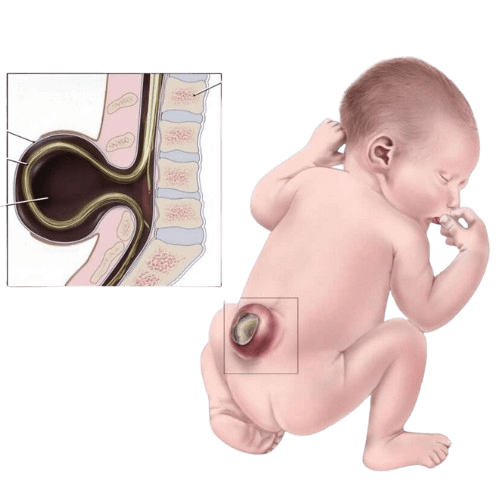
Spinal Dysraphism refers to congenital malformations of the spinal cord and vertebrae, such as spina bifida or tethered cord.
Surgery aims to correct structural abnormalities, relieve tension on neural tissues, and prevent progressive neurological damage. Early intervention improves functional outcomes and quality of life.
Types and Clinical Presentation of Spinal Dysraphism
Patients may present with neurological deficits, orthopedic deformities, or bladder/bowel dysfunction, depending on defect type.
- Tethered cord: Spinal cord is abnormally attached, restricting movement
- Spina bifida: Incomplete closure of vertebrae causing exposed neural tissue
- Other congenital malformations affecting spinal cord or vertebrae
Surgical Intervention and Technique
Surgery involves detethering the spinal cord, closing defects, and stabilizing vertebrae to prevent progression of neurological symptoms.
Postoperative Recovery and Care
Patients require monitoring for neurological function, infection, and wound healing. Rehabilitation supports motor function and bladder/bowel control.
Long-Term Outcomes and Prognosis
Early and precise surgical intervention often results in improved neurological outcomes, reduced deformity progression, and better quality of life.

B.U.M.S, M.D. (NAT) | Reg No. 9153 | Ex. Secretary & Treasurer, N.I.M.A.
Qualified healthcare professional in Unani and Naturopathic medicine with deep expertise in traditional healthcare systems, patient-centered clinical care, and medical content review.