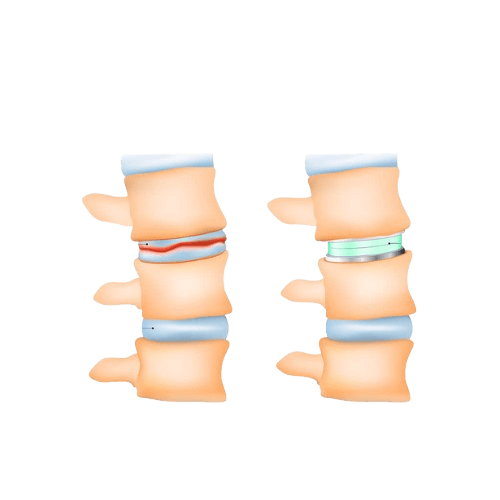
Overview
Spinal Disc Replacement involves replacing a damaged intervertebral disc with an artificial implant to restore spinal mobility and reduce pain.
Unlike fusion, disc replacement maintains motion at the affected level, potentially reducing stress on adjacent vertebrae and minimizing long-term degeneration.
Indications for Spinal Disc Replacement Surgery
Patients with severe disc degeneration, chronic back pain, or loss of function may benefit from artificial disc implantation. Evaluation includes imaging and functional assessment.
- Degenerative disc disease causing chronic pain
- Failed conservative therapy: Symptoms persist despite physiotherapy, medication, or injections
- No significant spinal instability at affected level
Surgical Technique and Implant Selection
The surgeon removes the damaged disc and inserts a prosthetic disc designed to mimic natural movement while providing stability.
Recovery and Rehabilitation Protocol
Patients typically mobilize within a day or two. Physical therapy helps restore spinal strength and flexibility over several weeks.
Expected Outcomes and Long-Term Results
Most patients experience reduced pain, preserved spinal motion, and improved function. Risks are rare but include implant migration or wear.