
Overview
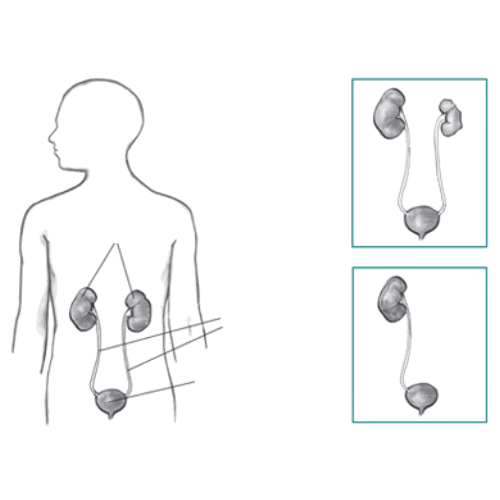
A Solitary Kidney refers to having only one functional kidney due to birth defect, injury, or surgical removal.
Most people with one kidney live normal, healthy lives, but need periodic monitoring for function, blood pressure, and urine protein.
Good hydration and avoiding kidney-toxic drugs are essential for long-term health.
Overview And Clinical Background
Solitary Kidney can be congenital or acquired.
The remaining kidney enlarges and compensates to maintain normal function.
- Types:: Congenital absence (renal agenesis) or surgical removal (nephrectomy).
- Adaptation:: Single kidney undergoes compensatory hypertrophy.
- Lifespan impact:: Usually normal with proper monitoring.
Symptoms, Signs And Presentation
Most people have no symptoms.
Issues arise only if the remaining kidney becomes diseased or injured.
- Typical findings:: Normal health but requires periodic urine and BP checks.
- Potential risks:: Proteinuria, hypertension, or kidney injury.
- Clinical advice:: Avoid nephrotoxic medications and dehydration.
Diagnosis Methods And Investigations
Monitoring And Function Tests
Regular evaluation ensures the single kidney continues functioning well.
Imaging helps confirm structural integrity.
- Tests:: Serum creatinine, eGFR, urine protein analysis.
- Imaging:: Ultrasound or CT to assess structure.
- Frequency:: Annual check-ups for lifelong monitoring.
Treatment Options And Surgical Techniques
No specific treatment is needed if the kidney is healthy.
Preventive care and lifestyle adjustments protect long-term function.
- Diet:: Low-salt, balanced diet with adequate hydration.
- Activity:: Avoid high-impact sports to prevent injury.
- Medical care:: Prompt treatment of urinary infections.
Recovery, Risks And Prognosis
Most people with a solitary kidney live full, healthy lives.
Slightly increased risk of kidney stress over decades is manageable with care.
Why Choose Us
CureU Healthcare provides long-term monitoring and tailored guidance for individuals living with one kidney, ensuring optimal health and function.
Conclusion
Having a single kidney doesn’t limit life — it simply calls for mindful living and regular medical follow-ups.

B.U.M.S, M.D. (NAT) | Reg No. 9153 | Ex. Secretary & Treasurer, N.I.M.A.
Qualified healthcare professional in Unani and Naturopathic medicine with deep expertise in traditional healthcare systems, patient-centered clinical care, and medical content review.