
Overview
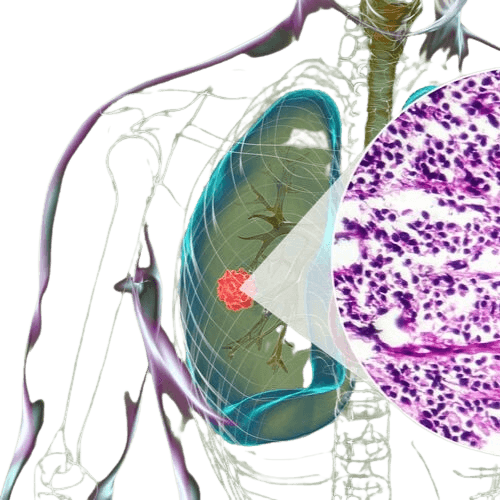
Small cell carcinoma most commonly arises in the lungs and is characterised by rapid growth, early metastatic spread and high initial sensitivity to chemotherapy and radiotherapy.
Because it progresses quickly, urgent diagnosis, accurate staging and prompt combined-modality treatment are essential to achieve the best possible outcomes.
Overview And Clinical Background
Aggressive neuroendocrine malignancy
Small cell carcinoma is a high-grade neuroendocrine tumor that often presents with bulky intrathoracic disease and early systemic dissemination.
Strong association with smoking exists and paraneoplastic syndromes may complicate presentation.
- Biology: Derived from neuroendocrine cells, small cell carcinoma exhibits rapid proliferation and a high mitotic index, explaining its quick spread and initial chemo-sensitivity but also high relapse rates.
- Risk factors: Tobacco smoking is the dominant risk factor; exposure history is critical to clinical suspicion and screening in high-risk individuals.
- Clinical behaviour: Tends to present at an advanced stage with early nodal and distant metastases, making systemic therapy central to management.
Symptoms, Signs And Presentation
Patients often present with cough, chest pain, breathlessness, weight loss or paraneoplastic symptoms (eg. SIADH, Lambert-Eaton syndrome).
Rapid symptom progression is common and requires expedited evaluation.
- Respiratory symptoms: New or worsening cough, hemoptysis, chest tightness and breathlessness often accompany central bronchial tumours and lymphadenopathy.
- Systemic features: Unintentional weight loss, fatigue and night sweats reflect systemic disease burden and metabolic effects.
- Paraneoplastic signs: Syndromes such as SIADH (hyponatremia) or neurological presentations (Lambert-Eaton) may be first clues to underlying small cell carcinoma.
Diagnosis Methods And Investigations
Imaging, biopsy and staging
Diagnosis uses chest imaging (CT), PET-CT for staging, and tissue diagnosis via bronchoscopy or CT-guided biopsy.
Comprehensive staging distinguishes limited from extensive disease to guide combined therapy decisions.
- Tissue diagnosis: Bronchoscopic or percutaneous biopsy yields small cell histology and helps exclude other lung cancer subtypes; immunohistochemistry supports neuroendocrine differentiation.
- Staging scans: Contrast CT chest/abdomen and PET-CT identify regional nodes and distant metastases; brain MRI is important because of high CNS metastatic risk.
- Laboratory studies: Baseline blood tests including sodium and endocrine panels evaluate paraneoplastic effects and organ function before initiating therapy.
Treatment Options And Surgical Techniques
Limited-stage disease may be treated with concurrent chemoradiation with curative intent, while extensive-stage disease relies on systemic chemotherapy often combined with immunotherapy; prophylactic cranial irradiation or brain MRI surveillance are considered due to high CNS relapse risk.
- Chemoradiation: Concurrent platinum-based chemotherapy and thoracic radiotherapy is standard for limited-stage disease to maximize local and systemic control.
- Systemic therapy: Platinum-etoposide chemotherapy combined with immune checkpoint inhibitors is frontline for extensive-stage disease and aims to extend survival and palliate symptoms.
- CNS-directed care: Prophylactic cranial irradiation or close MRI surveillance reduces the risk of symptomatic brain metastases and is tailored to patient response and performance status.
Recovery, Risks And Prognosis
Small cell carcinoma initially responds well to therapy but frequently relapses; median survival varies markedly by stage, with limited-stage disease having significantly better outcomes than extensive-stage disease.
Supportive care and early management of treatment toxicities are essential to maintain therapy intensity.
Why Choose Us
CureU Healthcare provides rapid diagnostic pathways, experienced thoracic oncology teams, access to combined chemoradiation and immunotherapy regimens, and supportive services to manage paraneoplastic complications and treatment toxicity.
We focus on delivering evidence-based, patient-centred care promptly for this aggressive disease.
Conclusion
Small cell carcinoma is an aggressive but initially treatment-sensitive cancer requiring urgent, coordinated multimodal care.
Early diagnosis, prompt systemic therapy and vigilant follow-up offer the best chance to control disease and maintain quality of life.

B.U.M.S, M.D. (NAT) | Reg No. 9153 | Ex. Secretary & Treasurer, N.I.M.A.
Qualified healthcare professional in Unani and Naturopathic medicine with deep expertise in traditional healthcare systems, patient-centered clinical care, and medical content review.