Overview
Skin cancer arises when abnormal cells in the skin grow uncontrollably, often due to UV exposure.
It includes types such as basal cell carcinoma, squamous cell carcinoma, and melanoma, each requiring different management approaches.
Overview And Clinical Background
Skin cancer is the most common type of cancer worldwide.
It often results from cumulative sun exposure or genetic susceptibility.
- Key point one:: Basal cell carcinoma is the most frequent and least aggressive form, while melanoma carries the highest mortality risk.
- Nonmelanoma cancers usually grow slowly and can be treated effectively if detected early.
- Third point:: Regular skin checks and sun protection significantly reduce the risk of developing skin malignancies.
Symptoms, Signs And Presentation
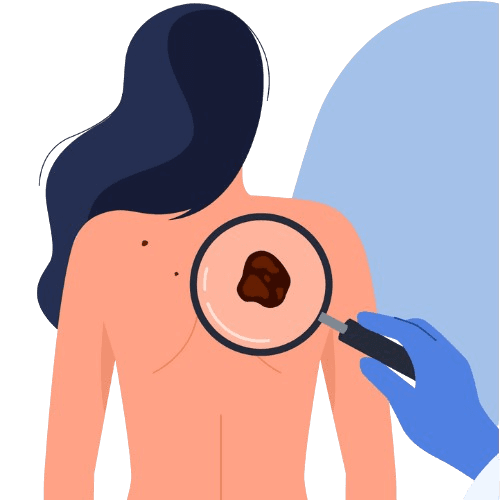
Different skin cancers present distinct visual changes.
Recognizing early signs improves prognosis.
- Common symptom:: A new or changing mole, or a sore that doesn’t heal, may signal malignancy.
- Itching, bleeding, or irregular pigment distribution can also be warning signs.
- Red flag:: Rapidly growing, dark, or asymmetric lesions with uneven borders should be evaluated urgently.
Diagnosis Methods And Investigations
Imaging And Laboratory Tests
Diagnosis starts with visual inspection followed by dermoscopy and biopsy.
Further testing helps determine spread.
- Imaging:: Dermatoscopy and imaging help assess lesion depth and characteristics.
- Lab tests:: Biopsy confirms histology type; additional blood tests assess systemic involvement in advanced cases.
- Sentinel lymph node biopsy may be used for staging melanoma.
Treatment Options And Surgical Techniques
Treatment depends on cancer type, size, and stage.
Surgery is most common, with other modalities for advanced disease.
- Conservative:: Topical therapies and cryotherapy may treat superficial lesions effectively.
- Minimally invasive options:: Mohs micrographic surgery allows precise removal with tissue preservation.
- Immunotherapy and targeted therapy are effective for advanced or metastatic melanoma.
Recovery, Risks And Prognosis
Most skin cancers are curable with early detection.
Regular follow-ups ensure recurrence monitoring and cosmetic recovery.
Why Choose Us
CureU Healthcare combines expert dermatologic oncology, reconstructive surgery, and patient-centered care for optimal outcomes.
Our approach emphasizes early detection and minimal scarring.
Conclusion
Skin cancer outcomes are excellent when treated early.
Awareness, protection, and professional evaluation are key to prevention and cure.

B.U.M.S, M.D. (NAT) | Reg No. 9153 | Ex. Secretary & Treasurer, N.I.M.A.
Qualified healthcare professional in Unani and Naturopathic medicine with deep expertise in traditional healthcare systems, patient-centered clinical care, and medical content review.