Overview
Rotational Atherectomy is a minimally invasive cardiac procedure used to treat complex, calcified coronary artery blockages.
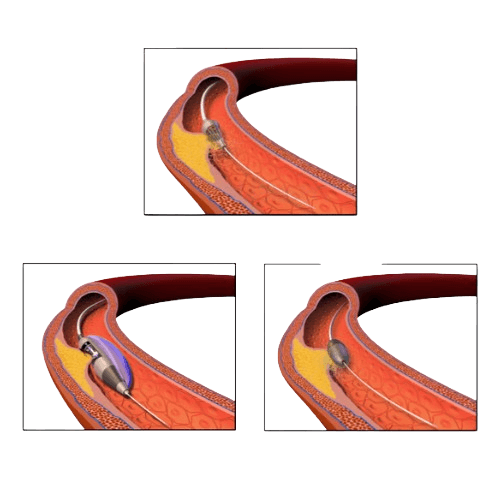
It uses a high-speed diamond-tipped burr to grind down hard plaque, improving the artery’s flexibility and allowing successful stent implantation.
The technique is especially valuable for patients with resistant or rigid lesions.
Overview And Clinical Background
Rotational Atherectomy prepares calcified arteries for effective stent placement.
It is performed when balloon angioplasty alone is insufficient to open the artery.
- Purpose:: To modify calcified lesions that prevent adequate stent expansion.
- Device:: A diamond-tipped burr rotating at high speed grinds plaque into micro-particles.
- Advantage:: Allows safer and more durable stent implantation.
Symptoms, Signs And Presentation
Patients usually report angina, breathlessness, or exercise intolerance due to reduced coronary flow.
Severe calcification can lead to recurrent angina or myocardial infarction.
- Common symptom:: Tightness or burning chest pain on exertion.
- Other signs:: Fatigue, palpitations, or shortness of breath.
- Red flag:: Sudden severe chest pain with sweating or nausea requires emergency evaluation.
Diagnosis Methods And Investigations
Angiography And Intravascular Imaging
Angiography helps visualize the location and severity of calcification.
Intravascular imaging provides real-time insight into plaque structure before intervention.
- Coronary angiogram:: Determines blockage extent and lesion characteristics.
- IVUS/OCT:: Helps assess calcium distribution for procedural planning.
- Functional tests:: May include stress tests to evaluate ischemia severity.
Treatment Options And Surgical Techniques
The burr is advanced over a guidewire to the calcified area and rotated at high speed to shave the plaque.
The debris is safely washed away, and a stent is placed afterward.
- Technique:: High-speed rotational burr ablation of calcified plaque.
- Follow-up step:: Balloon angioplasty and stenting after plaque removal.
- Outcome:: Improved stent delivery, vessel patency, and long-term flow restoration.
Recovery, Risks And Prognosis
Recovery is typically smooth with discharge within 24–48 hours.
Risks include transient slow flow or vessel injury, but complications are uncommon with proper technique.
Long-term results are excellent with optimal stent expansion.
Why Choose Us
CureU Healthcare’s interventional cardiologists are skilled in advanced atherectomy techniques using the latest devices.
We combine imaging precision and clinical expertise for safer, more effective outcomes.
Conclusion
Rotational Atherectomy enables successful treatment of complex coronary blockages.
It restores circulation and provides lasting heart health improvement.