Overview
Rotablation-guided stenting is a specialized cardiac procedure designed for patients with heavily calcified coronary arteries.
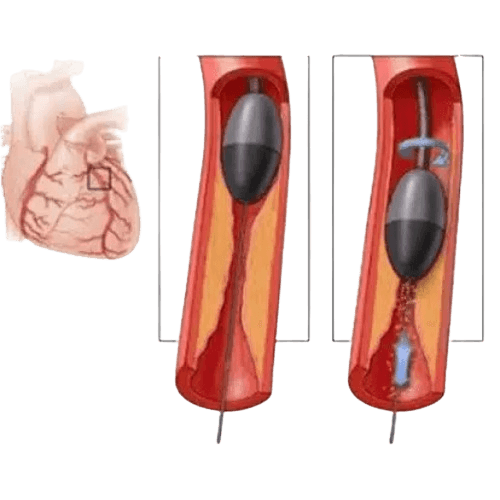
It uses a high-speed rotating burr to break down tough calcium deposits inside the arteries before a stent is implanted.
This technique ensures the stent can expand properly, improving blood flow and long-term results in complex heart blockages.
Overview And Clinical Background
Rotablation-guided stenting is used when standard angioplasty cannot cross or dilate a calcified lesion.
The process involves using a diamond-tipped burr that rotates at high speed to modify plaque and prepare the artery for stent placement.
- Purpose:: To treat severely calcified coronary artery blockages that resist balloon dilation.
- Technique:: Uses a rotating burr to remove calcium before stenting.
- Advantage:: Improves stent expansion and long-term vessel patency.
Symptoms, Signs And Presentation
Patients often present with chest pain, breathlessness, or fatigue due to restricted blood flow.
These symptoms worsen with exertion and may signal underlying coronary artery disease.
- Common symptom:: Chest discomfort or heaviness during physical activity.
- Other signs:: Shortness of breath, fatigue, or dizziness.
- Red flag:: Severe or prolonged chest pain may indicate a heart attack and needs emergency care.
Diagnosis Methods And Investigations
Coronary Imaging And Functional Testing
Diagnosis includes angiography to visualize blockages and assess calcification.
Intravascular ultrasound (IVUS) or optical coherence tomography (OCT) help determine the need for rotablation.
- Coronary angiogram:: Shows blockage severity and plaque composition.
- IVUS/OCT:: Provides detailed imaging for procedural planning.
- Cardiac stress testing:: Assesses the functional impact of narrowed arteries.
Treatment Options And Surgical Techniques
After identifying calcified segments, a guidewire and burr are used to ablate the calcium.
A stent is then deployed to keep the artery open and restore smooth blood flow.
- Procedure:: Rotablation followed by stent placement under fluoroscopic guidance.
- Alternative:: Intravascular lithotripsy for certain types of calcium deposits.
- Outcome:: Enhanced stent performance and lower restenosis risk.
Recovery, Risks And Prognosis
Recovery is usually quick, with patients discharged within a day or two.
Risks include vessel injury or slow flow, but these are rare with expert care.
Long-term outcomes are excellent with proper medication and lifestyle changes.
Why Choose Us
CureU Healthcare’s interventional cardiology team uses advanced rotablation systems and imaging technology.
Our precision-driven approach ensures safety, success, and lasting relief from coronary blockages.
Conclusion
Rotablation-guided stenting is an advanced solution for treating calcified coronary arteries.
It restores normal blood flow and improves heart health through precision and expertise.