Overview
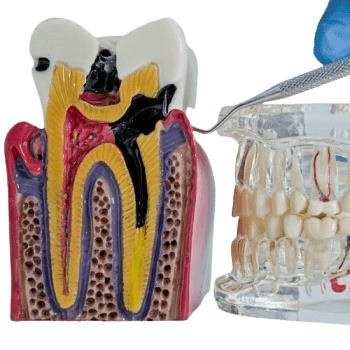
A root canal is a dental procedure used to treat infection or inflammation of the tooth pulp.
The process involves cleaning, disinfecting, and sealing the root canals to prevent further infection.
It’s a common, highly effective way to save natural teeth that would otherwise require extraction.
Overview And Clinical Background
Saving The Natural Tooth
Root canal therapy (endodontic treatment) is performed when the pulp inside a tooth becomes infected or inflamed due to deep decay, trauma, or cracks.
The goal is to remove infection, relieve pain, and preserve the tooth structure.
With modern anesthetics and technology, the treatment is virtually painless and has high success rates.
- Clinical purpose:: Removes infected pulp tissue and seals the canals to prevent bacteria from re-entering.
- Maintains chewing function and alignment by saving the natural tooth.
- Prognosis:: Over 90% success rate when performed with precision and proper post-treatment restoration.
Symptoms, Signs And Presentation
Patients usually report severe toothache, prolonged sensitivity, or swelling near the affected tooth.
Ignoring these symptoms can lead to abscess formation and bone loss.
- Common symptom:: Sharp pain when chewing or applying pressure on a specific tooth.
- Darkened tooth color or swelling of gums around the root area.
- Red flag:: Fever, pus discharge, or facial swelling indicating spreading infection.
Diagnosis Methods And Investigations
Imaging And Vitality Testing
Diagnosis relies on a mix of patient history, radiographic evaluation, and clinical testing to assess pulp status.
CBCT imaging is sometimes used for complex canal anatomy.
- Imaging:: Periapical X-rays reveal the extent of infection and confirm success post-treatment.
- Lab tests:: Usually not needed unless systemic infection is suspected.
- Electric pulp testing determines pulp vitality before treatment planning.
Treatment Options And Surgical Techniques
The dentist removes infected pulp, disinfects the canal system, and seals it with biocompatible material.
In some cases, retreatment or apicoectomy may be needed for persistent infection.
- Conservative:: Performed when infection is limited and tooth structure is largely intact.
- Minimally invasive options:: Rotary instrumentation and advanced irrigation systems reduce discomfort and improve precision.
- Surgical endodontics (apicoectomy) may be used if infection persists at the root tip.
Recovery, Risks And Prognosis
Mild discomfort may persist for 24–48 hours but is manageable with medication.
Once restored with a crown, treated teeth function normally and last for years.
Why Choose Us
CureU Healthcare offers expert endodontic care with digital imaging, rotary tools, and advanced bioceramic sealers.
Our approach ensures comfort, precision, and long-term tooth preservation.
Conclusion
Root canal treatment restores oral health and prevents tooth loss.
With modern dental technology, it’s safe, efficient, and virtually painless.