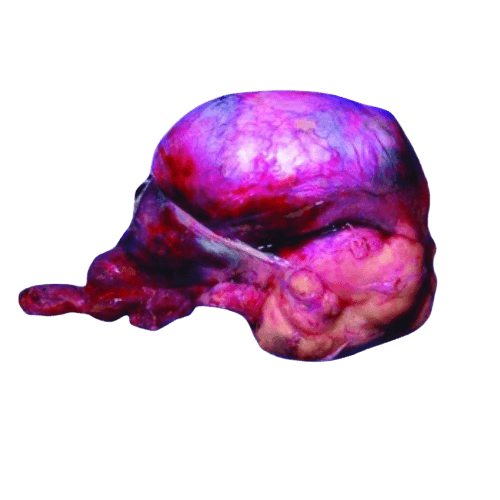
Overview
Rhabdomyosarcoma (RMS) is a rare and aggressive soft tissue cancer that arises from immature skeletal muscle cells.
It most often affects children and adolescents and can occur anywhere in the body, including the head, neck, or genitourinary tract.
Overview And Clinical Background
RMS is classified into embryonal and alveolar types, with distinct behaviors and prognoses.
It is often treated with a combination of chemotherapy, surgery, and sometimes radiation therapy.
- Key point one:: RMS develops from cells that normally become striated muscle and can appear in locations lacking skeletal muscle, such as the bladder or orbit.
- Early-stage RMS responds well to combination therapy, improving survival when treated in specialized centers.
- Third point:: Advanced imaging and molecular diagnostics now allow tailored treatment and better disease monitoring.
Symptoms, Signs And Presentation
Symptoms vary depending on tumor location.
The mass may appear as a painless swelling initially but can grow rapidly.
- Common symptom:: A progressively enlarging lump, often painless, is the most typical presentation.
- If located near the eye or nose, patients may show visual disturbances or nasal blockage.
- Red flag:: Rapid enlargement, pain, or pressure symptoms indicating invasion of adjacent structures.
Diagnosis Methods And Investigations
Imaging And Laboratory Tests
Diagnosis requires imaging, histopathological confirmation, and staging studies.
Multimodal testing ensures accurate classification.
- Imaging:: MRI and CT scans assess tumor extent, infiltration, and distant metastases.
- Lab tests:: Biopsy with immunohistochemistry confirms muscle differentiation markers like desmin and myogenin.
- PET scans are useful in evaluating metastasis and treatment response.
Treatment Options And Surgical Techniques
Treatment combines chemotherapy, surgery, and radiotherapy depending on location and stage.
The goal is complete removal with functional preservation.
- Conservative:: Chemotherapy helps shrink tumors before surgery, making them more operable and reducing recurrence.
- Minimally invasive options:: Modern image-guided surgeries allow precision removal with minimal collateral damage.
- Radiation therapy may follow surgery for residual or high-risk disease areas.
Recovery, Risks And Prognosis
With proper multidisciplinary management, long-term survival can exceed 70% in localized RMS.
Rehabilitation and psychosocial support aid recovery.
Why Choose Us
At CureU Healthcare, pediatric oncology specialists use evidence-based multimodal protocols for RMS, integrating advanced imaging and personalized therapy.
Family support and child-focused care remain central to treatment.
Conclusion
Rhabdomyosarcoma, though rare, is highly treatable with modern care.
Early diagnosis and specialized treatment significantly enhance survival and quality of life.

B.U.M.S, M.D. (NAT) | Reg No. 9153 | Ex. Secretary & Treasurer, N.I.M.A.
Qualified healthcare professional in Unani and Naturopathic medicine with deep expertise in traditional healthcare systems, patient-centered clinical care, and medical content review.