Overview
Surgical treatment for prostate cancer, typically through radical prostatectomy, aims to remove the entire prostate gland and nearby tissues for localised disease.
Advances in robotic and laparoscopic surgery have improved functional outcomes, reducing blood loss and preserving continence and sexual function.
Overview And Clinical Background
Common cancer of aging men
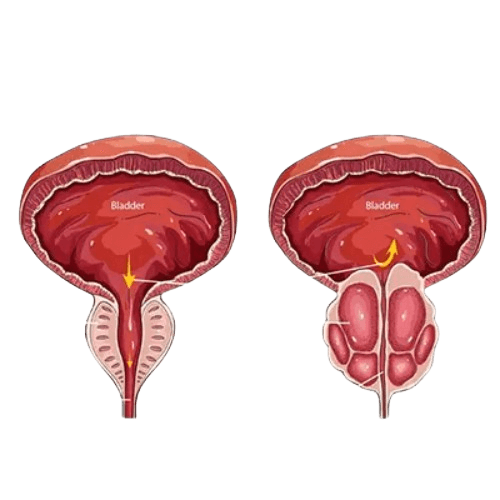
Prostate cancer often grows slowly and is confined to the gland.
Surgery offers potential cure in localised stages, with precise techniques reducing side effects.
- Epidemiology: Common in men over 50; screening and PSA monitoring aid early detection.
- Tumor biology: Most are adenocarcinomas with predictable local spread patterns.
- Treatment intent: Curative for localised cancer, occasionally used palliatively for obstruction relief.
Symptoms, Signs And Presentation
Early stages are often asymptomatic; later stages may cause urinary symptoms or bone pain if metastasised.
- Urinary changes: Frequency, hesitancy, weak stream or incomplete emptying.
- Advanced signs: Bone pain, fatigue, or weight loss with metastatic spread.
- Screening indicator: Raised PSA levels warrant evaluation even without symptoms.
Diagnosis Methods And Investigations
PSA, imaging and biopsy
Prostate biopsy under ultrasound guidance confirms diagnosis.
MRI and bone scans evaluate local extent and metastases.
- PSA test: Prostate-specific antigen screening for early detection.
- Biopsy: Core needle biopsy through rectum or perineum for tissue confirmation.
- MRI pelvis: Maps local invasion and surgical planning.
Treatment Options And Surgical Techniques
Radical prostatectomy — open, laparoscopic, or robotic — removes the prostate and nearby lymph nodes.
Robotic-assisted techniques improve precision and recovery time.
- Robotic prostatectomy: Minimally invasive removal using robotic arms for accuracy and reduced trauma.
- Open or laparoscopic approach: Choice depends on surgeon expertise and patient factors.
- Nerve-sparing technique: Preserves erectile and urinary function where feasible.
Recovery, Risks And Prognosis
Hospital stay is short, with catheter removal after one to two weeks.
Recovery of continence and sexual function may take months; outcomes are excellent in early stages.
Why Choose Us
CureU Healthcare’s robotic prostate surgery program provides advanced precision, faster healing, and expert multidisciplinary management for prostate cancer patients.
Conclusion
Prostate cancer surgery offers durable cure for localised disease with careful planning and precision techniques ensuring quality of life post-surgery.

B.U.M.S, M.D. (NAT) | Reg No. 9153 | Ex. Secretary & Treasurer, N.I.M.A.
Qualified healthcare professional in Unani and Naturopathic medicine with deep expertise in traditional healthcare systems, patient-centered clinical care, and medical content review.