Overview
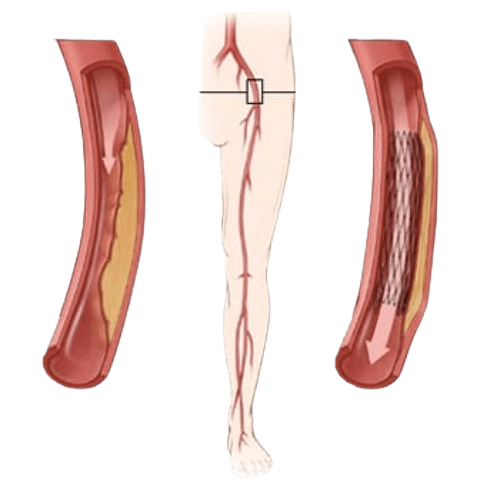
Peripheral angioplasty is a minimally invasive vascular procedure that restores blood flow in arteries narrowed or blocked by plaque buildup.
It’s often performed in the legs or arms when patients experience reduced circulation, pain while walking, or non-healing wounds.
Using a catheter with a small balloon at its tip, the surgeon gently expands the blocked vessel, sometimes inserting a stent to keep it open.
This technique helps prevent serious complications such as ulcers, gangrene, or even limb loss, while greatly improving walking ability and quality of life.
Overview And Clinical Background
How Peripheral Angioplasty Works
Peripheral angioplasty is performed through a small puncture in the skin rather than a large incision.
The surgeon threads a catheter through the arteries under imaging guidance to the site of narrowing.
Once positioned, a small balloon is inflated to compress the plaque against the artery wall and restore normal blood flow.
In many cases, a stent—a tiny wire mesh tube—is placed to prevent re-narrowing.
This procedure has transformed the management of peripheral artery disease, offering shorter recovery, less pain, and minimal hospital stay compared to open surgery.
- Primary goal:: To reopen narrowed arteries caused by atherosclerotic plaque buildup and restore continuous blood flow to affected limbs. The process allows oxygen-rich blood to reach tissues that were previously starved, reducing pain and preventing tissue death.
- Procedure details:: Performed under local anesthesia with image-guided precision. A thin catheter is introduced, the balloon is expanded for several seconds, and sometimes drug-coated balloons or stents are deployed to maintain long-term patency.
- Clinical benefit:: Provides immediate symptom relief, prevents progression to critical limb ischemia, and reduces the need for major amputation or open bypass surgery.
Symptoms, Signs And Presentation
Patients suitable for angioplasty usually present with discomfort or pain in their legs during walking, known as claudication.
As the disease progresses, pain may appear even at rest, indicating severe arterial obstruction.
These symptoms often interfere with mobility, sleep, and daily activities, which can be reversed with proper vascular intervention.
- Common symptom:: Intermittent claudication—pain or cramping in the legs during walking that improves with rest due to insufficient blood flow. It is often mistaken for muscle fatigue but signifies arterial narrowing.
- Coldness or paleness in the feet and toes, slow-growing toenails, and reduced hair growth on the legs indicating chronic poor circulation and tissue undernourishment.
- Red flag:: Pain at rest, non-healing ulcers, or blackened toes signify critical limb ischemia, requiring urgent angioplasty or surgery to prevent gangrene and possible limb loss.
Diagnosis Methods And Investigations
Imaging And Laboratory Tests
Diagnosis begins with clinical assessment of pulses, skin color, and temperature, followed by non-invasive imaging tests.
These tests determine the location, extent, and severity of arterial narrowing and guide treatment planning.
Laboratory evaluation also helps identify systemic risk factors such as diabetes or dyslipidemia.
- Imaging:: Doppler ultrasound assesses blood flow velocity and direction in limb arteries. CT or MR angiography provides a detailed map of blockages, while digital subtraction angiography (DSA) is used intraoperatively for precise intervention guidance.
- Lab tests:: Lipid profile, blood sugar, and renal function tests are crucial to assess risk factors, rule out contraindications, and ensure safe contrast use during imaging or intervention.
- Additional functional tests like ankle-brachial index (ABI) help quantify the severity of obstruction and monitor response after treatment.
Treatment Options And Surgical Techniques
Peripheral angioplasty is part of a larger treatment plan that includes lifestyle modification, medication, and in some cases, surgical bypass.
The treatment goal is to relieve symptoms, promote wound healing, and prevent future blockages through comprehensive vascular care.
- Conservative:: Lifestyle modification—such as smoking cessation, regular exercise, and weight control—combined with medications like antiplatelets and statins for early-stage disease or post-procedure maintenance.
- Minimally invasive options:: Balloon angioplasty, stent placement, and atherectomy (plaque removal) performed through a small puncture under imaging guidance. These techniques achieve rapid recovery and effective symptom relief without large incisions.
- For patients with long or multiple blockages, open surgical bypass using vein grafts may be considered if endovascular therapy isn’t sufficient or durable.
Recovery, Risks And Prognosis
Most patients recover within a few days, with noticeable improvement in limb comfort and walking ability.
Complications are rare but can include minor bleeding at the puncture site, artery spasm, or re-narrowing (restenosis).
Long-term success depends on ongoing control of blood pressure, cholesterol, and diabetes.
With modern drug-coated stents and careful follow-up, angioplasty outcomes are excellent and durable for years.
Why Choose Us
At CureU Healthcare, we use advanced image-guided systems and precision catheters to ensure safe, effective angioplasty.
Our vascular surgeons collaborate with cardiologists and radiologists to create personalized treatment plans.
Patients benefit from quick recovery, minimal discomfort, and comprehensive post-procedure care focused on long-term vascular wellness.
Conclusion
Peripheral angioplasty offers a reliable, less invasive solution for patients suffering from blocked arteries.
With skilled intervention and proper follow-up, it restores circulation, prevents serious complications, and allows patients to regain comfort and confidence in daily movement.


