Overview
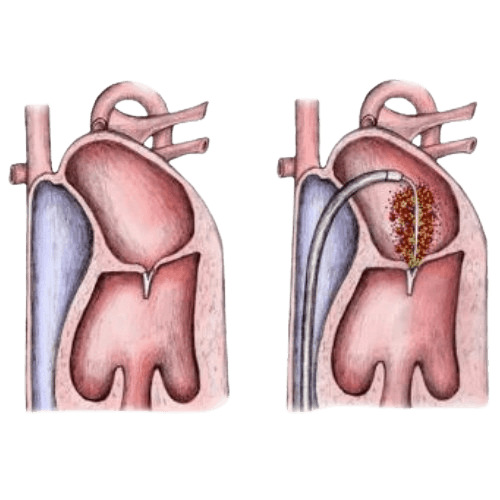
Percutaneous Transvenous Mitral Commissurotomy (PTMC) is a catheter-based procedure used to treat mitral valve stenosis.
By inserting a balloon catheter through a vein and inflating it within the mitral valve, the narrowed valve is widened, improving blood flow from the left atrium to the left ventricle.
It’s an effective option for patients who may not need open-heart surgery.
Overview And Clinical Background
PTMC is primarily performed for patients with rheumatic heart disease leading to mitral valve narrowing.
It offers a less invasive alternative to surgical commissurotomy with quicker recovery.
- Purpose:: To relieve obstruction caused by a narrowed mitral valve.
- Approach:: Uses balloon dilation via catheter to separate fused valve leaflets.
- Candidates:: Ideal for patients with suitable valve anatomy and minimal calcification.
Symptoms, Signs And Presentation
Mitral stenosis can cause shortness of breath, fatigue, and irregular heartbeat.
Severe narrowing may lead to pulmonary hypertension and right heart failure.
- Common symptom:: Breathlessness during activity or lying flat.
- Other signs:: Swelling in ankles or feet, palpitations, and fatigue.
- Red flag:: Sudden worsening breathlessness or chest pain needs urgent attention.
Diagnosis Methods And Investigations
Echocardiography And Cardiac Imaging
Diagnosis relies on echocardiography to assess valve structure and severity.
Cardiac catheterization may be used for detailed evaluation.
- Echocardiogram:: Evaluates valve area, gradients, and leaflet mobility.
- Cardiac catheterization:: Used to confirm diagnosis and plan intervention.
- Additional imaging:: May include CT or MRI for complex cases.
Treatment Options And Surgical Techniques
PTMC is performed under imaging guidance in a cath lab.
The balloon catheter is threaded into the heart via a vein and inflated to open the valve.
- Procedure:: Balloon dilation of the mitral valve under fluoroscopic control.
- Alternative:: Surgical commissurotomy for unsuitable valve anatomy.
- Outcome:: Most patients experience significant improvement in symptoms.
Recovery, Risks And Prognosis
Most patients recover within a few days.
Risks include valve regurgitation, stroke, or need for repeat intervention.
Long-term outcomes are favorable with proper follow-up.
Why Choose Us
At CureU Healthcare, our cardiology team specializes in advanced catheter-based procedures like PTMC.
We ensure accurate diagnosis, expert care, and post-procedure monitoring for the best outcomes.
Conclusion
PTMC provides relief for patients with mitral stenosis through a safe, minimally invasive approach.
It restores heart function and improves quality of life.