Overview
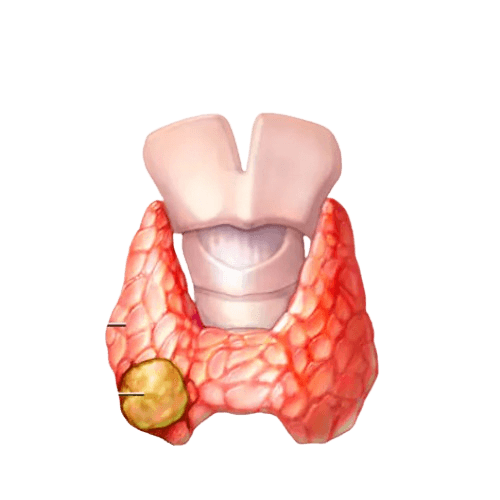
Papillary thyroid cancer arises from thyroid follicular cells and is the commonest form of thyroid malignancy.
It usually grows slowly, often discovered as a nodule on ultrasound or incidentally after imaging.
Management centres on risk-adapted surgery, potential radioactive iodine ablation, and long-term thyroid hormone replacement and surveillance to ensure excellent long-term outcomes.
Overview And Clinical Background
Differentiated thyroid cancer with favourable biology
Papillary carcinoma typically behaves indolently and often remains confined to the thyroid for long periods.
It may spread to regional lymph nodes early but still carries a favourable prognosis compared with many other solid tumours.
- Prevalence: Most common thyroid cancer subtype with generally excellent survival.
- Risk factors: Radiation exposure, family history, and certain genetic syndromes increase risk.
- Biology: Usually slow-growing and iodine-avid, which aids radioactive iodine therapy.
Symptoms, Signs And Presentation
Many patients are asymptomatic with a thyroid nodule found on exam or imaging.
Hoarseness, neck swelling or rapid growth raise concern for more aggressive disease.
- Palpable nodule: A painless lump in the neck noticed by patient or clinician.
- Voice change or local compressive symptoms in larger tumours.
- Red flag: Rapid enlargement, firm fixed mass or suspicious lymphadenopathy require urgent evaluation.
Diagnosis Methods And Investigations
Ultrasound, cytology and molecular testing
High-resolution ultrasound assesses nodule features; fine-needle aspiration cytology categorises risk and guides surgery.
Molecular tests refine risk stratification when cytology is indeterminate.
- Ultrasound: Characterises nodule size, margins, calcifications and suspicious lymph nodes.
- FNAC: Fine-needle aspiration provides cytologic diagnosis and informs management.
- Molecular profiling for indeterminate nodules aids decision-making.
Treatment Options And Surgical Techniques
Surgery (lobectomy or total thyroidectomy) is the primary treatment; decision depends on tumour size, multifocality and risk factors.
Radioactive iodine ablation and TSH suppression with levothyroxine are used selectively for higher-risk disease.
- Surgical options: Lobectomy for small unilateral tumours; total thyroidectomy for bilateral or higher-risk disease.
- Adjuvant therapy: Radioactive iodine for remnant ablation or metastatic disease when appropriate.
- Lifelong thyroid hormone replacement and TSH suppression in many patients.
Recovery, Risks And Prognosis
Recovery from thyroid surgery is usually swift; risks include transient voice changes and hypocalcaemia if parathyroid glands are affected.
Overall prognosis is excellent with high cure rates and long-term survival for most patients.
Why Choose Us
CureU Healthcare provides endocrine surgeons, expert ultrasound and molecular diagnostics, and coordinated long-term endocrine follow-up to personalise care and minimise complications.
Our pathways emphasise safe surgery, appropriate use of radioactive iodine, and quality-of-life preservation.
Conclusion
Papillary thyroid cancer generally has an excellent outlook when managed with risk-adapted surgery and follow-up.
Early assessment, precise surgery and structured surveillance deliver durable control and normal life expectancy.

B.U.M.S, M.D. (NAT) | Reg No. 9153 | Ex. Secretary & Treasurer, N.I.M.A.
Qualified healthcare professional in Unani and Naturopathic medicine with deep expertise in traditional healthcare systems, patient-centered clinical care, and medical content review.