Overview
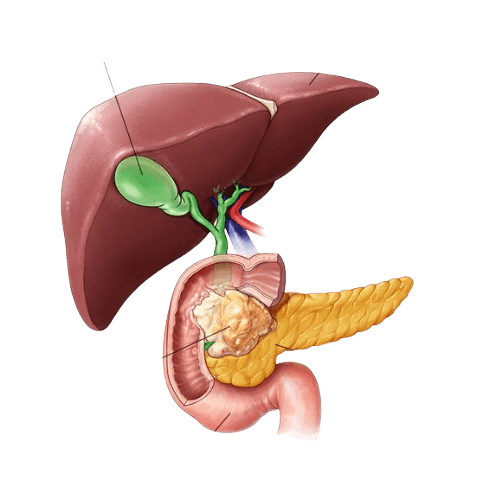
Pancreatic cancer most commonly refers to pancreatic ductal adenocarcinoma, an aggressive tumour with subtle early symptoms that often leads to late diagnosis.
Multidisciplinary care — combining experienced pancreatic surgeons, systemic therapy, and supportive services — is key to improving outcomes and preserving quality of life.
Where possible, curative-intent surgery (e.g., pancreaticoduodenectomy) combined with adjuvant therapy gives the best chance of long-term survival.
Overview And Clinical Background
Aggressive biology and late presentation
Pancreatic adenocarcinoma arises from ductal cells and has a propensity for early local invasion and systemic spread.
Risk factors include smoking, chronic pancreatitis, diabetes, obesity and hereditary syndromes; early detection is challenging but crucial for curative treatment.
- Common type: Pancreatic ductal adenocarcinoma accounts for the majority of cases.
- Risk factors: Smoking, long-standing pancreatitis, family history and certain genetic mutations.
- Natural history: Tendency for early vascular invasion and rapid metastatic spread.
Symptoms, Signs And Presentation
Symptoms are often nonspecific: painless jaundice with head-of-pancreas tumours, weight loss, vague abdominal pain, or new-onset diabetes.
Because early signs are subtle, imaging should follow promptly when these symptoms appear.
- Jaundice: Yellowing of eyes/skin, dark urine and pale stools with obstructive tumours.
- Constitutional symptoms: Weight loss, anorexia and persistent fatigue.
- Red flag: New-onset diabetes or rapidly progressive back/upper abdominal pain warrants urgent evaluation.
Diagnosis Methods And Investigations
Imaging, biopsy and staging
Contrast-enhanced CT is the primary staging investigation; MRI and endoscopic ultrasound with biopsy confirm diagnosis and guide resectability assessment.
CA 19-9 is a supportive tumour marker for monitoring but not diagnostic alone.
- Contrast CT: Pancreas-protocol CT to assess tumour extent and vascular involvement.
- Endoscopic ultrasound: Provides tissue diagnosis via fine-needle aspiration when needed.
- Staging workup: CT chest/abdomen/pelvis or PET for metastatic screening and surgical planning.
Treatment Options And Surgical Techniques
Curative-intent resection (Whipple/PD, distal pancreatectomy) is offered when disease is resectable; neoadjuvant or adjuvant chemotherapy improves outcomes.
For locally advanced or metastatic disease, systemic chemotherapy, targeted therapies and clinical trials are central to care; palliative procedures relieve biliary or gastric outlet obstruction.
- Curative surgery: Pancreaticoduodenectomy (Whipple) or distal pancreatectomy with lymphadenectomy for resectable tumours.
- Systemic therapy: Combination chemotherapy regimens (e.g., FOLFIRINOX, gemcitabine-based) in neoadjuvant/adjuvant or palliative settings.
- Palliative procedures: Biliary stenting or gastrojejunostomy to relieve obstruction and improve quality of life.
Recovery, Risks And Prognosis
Major pancreatic surgery requires specialised perioperative care; complications include pancreatic leak, infection and delayed gastric emptying.
Prognosis depends on stage — localized resected disease offers the best chance of longer survival while metastatic disease is managed for symptom control and life extension.
Why Choose Us
CureU Healthcare provides high-volume pancreatic surgery expertise, multidisciplinary oncology, interventional endoscopy and supportive palliative care.
Our integrated approach focuses on safe resections, evidence-based chemotherapy and maximising patient comfort and function.
Conclusion
Pancreatic cancer demands prompt specialist assessment for staging and multidisciplinary planning.
Where appropriate, surgery plus systemic therapy at experienced centres offers the best chance for long-term benefit.

B.U.M.S, M.D. (NAT) | Reg No. 9153 | Ex. Secretary & Treasurer, N.I.M.A.
Qualified healthcare professional in Unani and Naturopathic medicine with deep expertise in traditional healthcare systems, patient-centered clinical care, and medical content review.