Overview
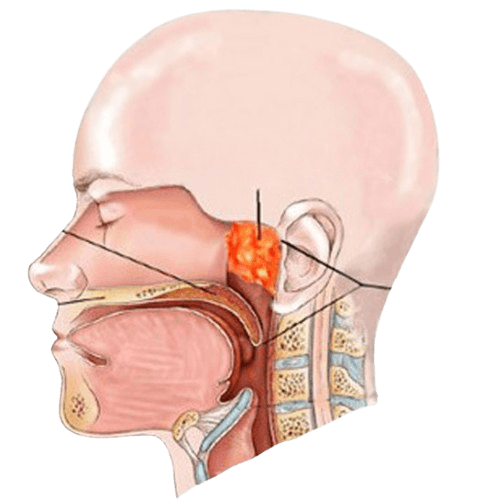
Nasopharyngeal cancer originates in the upper throat behind the nose, an area rich in lymphatic tissue.
It’s more prevalent in certain regions and linked to Epstein-Barr virus (EBV).
This cancer often presents late due to vague early symptoms like ear fullness or nasal blockage.
Overview And Clinical Background
It develops in the nasopharynx and often spreads to lymph nodes early.
Viral, genetic, and dietary factors contribute to risk.
- Primary cause:: Associated with Epstein-Barr virus infection.
- Prevalence:: Common in Asia and the Middle East.
- Nature:: Highly radiosensitive, allowing effective non-surgical treatment.
Symptoms, Signs And Presentation
Symptoms resemble chronic sinusitis, delaying diagnosis.
Neck swelling is often the first sign.
- Neck mass:: Enlarged lymph node due to metastasis.
- Ear blockage:: Tumor affects Eustachian tube function.
- Nosebleeds:: Result from mucosal irritation.
Diagnosis Methods And Investigations
Imaging And Laboratory Tests
Nasopharyngoscopy and biopsy confirm diagnosis, supported by imaging and EBV tests.
- Endoscopic exam:: Visualizes nasopharyngeal lesion.
- MRI/CT:: Assesses local and nodal spread.
- EBV titer:: Helps in diagnosis and monitoring.
Treatment Options And Surgical Techniques
Treatment focuses on radiotherapy, often with chemotherapy.
Surgery is rarely needed.
- Radiation therapy:: Mainstay for localized disease.
- Chemoradiation:: Used in advanced stages for better control.
- Surgical salvage:: For residual or recurrent tumors.
Recovery, Risks And Prognosis
Most patients respond well to radiotherapy.
Prognosis improves with early-stage diagnosis.
Why Choose Us
CureU Healthcare offers precision radiotherapy, ENT oncology teams, and EBV-based diagnostic support for nasopharyngeal cancers.
Conclusion
Nasopharyngeal cancer, though rare, is treatable with early detection and integrated radiation-based management.

B.U.M.S, M.D. (NAT) | Reg No. 9153 | Ex. Secretary & Treasurer, N.I.M.A.
Qualified healthcare professional in Unani and Naturopathic medicine with deep expertise in traditional healthcare systems, patient-centered clinical care, and medical content review.