Overview
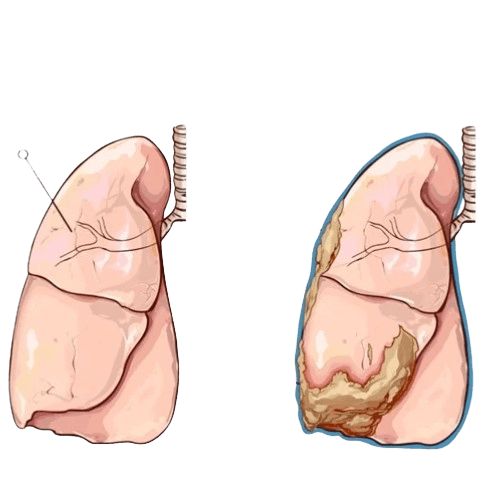
Malignant mesothelioma develops from the pleural lining surrounding the lungs and is strongly linked to asbestos exposure.
It progresses insidiously, often presenting decades after exposure.
Treatment requires a multidisciplinary approach with surgery, chemotherapy, and immunotherapy to control disease and symptoms.
Overview And Clinical Background
Asbestos exposure and pathophysiology
Asbestos fibers, when inhaled, lodge in the pleura causing chronic inflammation and genetic damage leading to mesothelial cell transformation.
The disease is aggressive and often diagnosed at an advanced stage.
- Common type: Pleural mesothelioma affecting lung lining; peritoneal and pericardial forms are rarer.
- Latency: Symptoms appear 20–40 years post-exposure.
- Risk group: Occupational exposure in construction, insulation, and shipyard workers.
Symptoms, Signs And Presentation
Symptoms include progressive shortness of breath, chest pain, dry cough, and weight loss.
Pleural effusion (fluid around lungs) is common and often the first finding.
- Respiratory distress: Breathlessness due to pleural effusion or tumor encasement.
- Chest pain: Persistent dull pain or heaviness on the affected side.
- Systemic effects: Fatigue, loss of appetite, and night sweats.
Diagnosis Methods And Investigations
Imaging and tissue confirmation
Chest CT, PET-CT, and thoracoscopy are used for diagnosis.
Biopsy from pleural nodules confirms malignancy, supported by immunohistochemistry markers such as calretinin and WT-1.
- Pleural imaging: CT chest or MRI shows pleural thickening and effusion.
- Thoracoscopy: Allows direct visualization and biopsy of pleural lesions.
- Histopathology: Confirms mesothelial origin and rules out metastatic carcinoma.
Treatment Options And Surgical Techniques
Treatment involves multimodal therapy combining surgery, chemotherapy, and immunotherapy.
Surgery options include pleurectomy/decortication (lung-sparing) or extrapleural pneumonectomy for selected patients.
- Surgery: Pleurectomy with decortication or extrapleural pneumonectomy in early stages.
- Chemotherapy: Pemetrexed and cisplatin remain the standard first-line regimen.
- Immunotherapy: Checkpoint inhibitors (nivolumab, pembrolizumab) show promise in advanced disease.
Recovery, Risks And Prognosis
Mesothelioma has a guarded prognosis, with median survival of 12–24 months.
Supportive care for symptom relief and pleural effusion drainage is crucial alongside active treatment.
Why Choose Us
CureU Healthcare provides integrated mesothelioma management — early diagnostic evaluation, expert thoracic surgery, systemic therapy access, and dedicated palliative care for comfort and function.
Conclusion
Malignant mesothelioma remains challenging but treatable.
Timely diagnosis, asbestos exposure awareness, and access to modern multimodal therapy offer patients better outcomes and comfort.

B.U.M.S, M.D. (NAT) | Reg No. 9153 | Ex. Secretary & Treasurer, N.I.M.A.
Qualified healthcare professional in Unani and Naturopathic medicine with deep expertise in traditional healthcare systems, patient-centered clinical care, and medical content review.