Overview
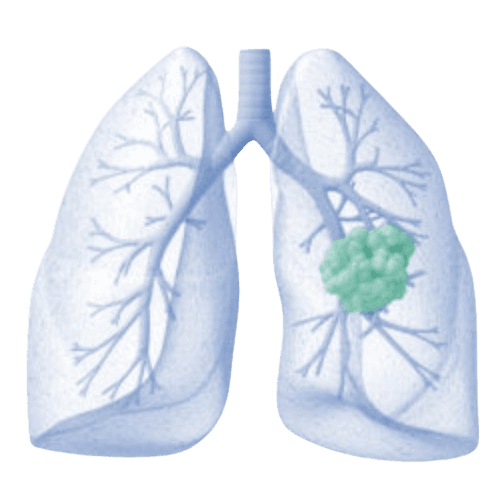
Lung carcinoid tumors originate from neuroendocrine cells of the lung and are usually low-grade and slow-growing.
They account for less than 5% of all lung cancers and may secrete hormones that cause carcinoid syndrome in rare cases.
Surgery remains the mainstay of treatment, often achieving long-term cure.
Overview And Clinical Background
Nature, types and biological behavior
Carcinoid tumors are classified as typical (low-grade) or atypical (intermediate-grade) based on cell proliferation and mitotic rate.
Typical carcinoids rarely metastasize, while atypical may spread to lymph nodes or distant sites.
- Types: Typical and atypical carcinoids differ by cell growth rate and spread potential.
- Common location: Often central bronchi or peripheral lung nodules found incidentally.
- Hormonal activity: Some secrete serotonin causing flushing and diarrhea (carcinoid syndrome).
Symptoms, Signs And Presentation
Many patients are asymptomatic; others experience cough, hemoptysis, wheezing, or recurrent pneumonia due to airway obstruction.
Carcinoid syndrome symptoms occur in a small subset.
- Respiratory: Cough, shortness of breath, wheezing, or chest discomfort.
- Bleeding: Occasional hemoptysis due to vascular tumor nature.
- Systemic: Flushing, diarrhea, and palpitations in hormonally active cases.
Diagnosis Methods And Investigations
Imaging and biopsy
CT chest and bronchoscopy identify and locate the lesion.
Biopsy confirms the neuroendocrine nature using chromogranin and synaptophysin markers.
- Imaging: Contrast CT or PET-CT to localize and assess spread.
- Bronchoscopic biopsy: Tissue confirmation via endobronchial sampling.
- Functional scans: Somatostatin receptor imaging (Octreoscan or Ga-68 PET) for staging.
Treatment Options And Surgical Techniques
Surgical excision is curative in most cases — options include sleeve resection, lobectomy, or segmentectomy.
Chemotherapy or radiotherapy is reserved for unresectable or metastatic disease.
- Surgery: Conservative lung-sparing surgery whenever feasible.
- Medical therapy: Octreotide for symptom control in hormonally active tumors.
- Follow-up: Long-term surveillance with imaging every 6–12 months.
Recovery, Risks And Prognosis
Post-surgical recovery is usually smooth; prognosis is excellent for typical carcinoids (5-year survival >90%).
Atypical variants need close monitoring for recurrence or metastasis.
Why Choose Us
CureU Healthcare offers minimally invasive thoracic surgery and specialized neuroendocrine tumor expertise — combining precision resection, hormonal management, and long-term surveillance under one roof.
Conclusion
Lung carcinoid tumors are rare but highly treatable; complete surgical removal and expert follow-up ensure lasting control and quality of life.

B.U.M.S, M.D. (NAT) | Reg No. 9153 | Ex. Secretary & Treasurer, N.I.M.A.
Qualified healthcare professional in Unani and Naturopathic medicine with deep expertise in traditional healthcare systems, patient-centered clinical care, and medical content review.