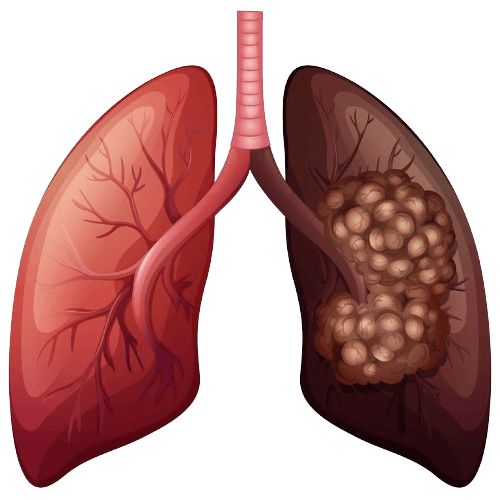
Overview
Lung cancer originates from the epithelial cells of the lungs and is broadly divided into non-small cell (NSCLC) and small cell (SCLC) types.
The condition is often linked to smoking but can also occur in non-smokers due to genetic mutations or environmental exposure.
Treatment involves a combination of surgery, chemotherapy, radiotherapy, targeted therapy, and immunotherapy depending on cancer type and stage.
Overview And Clinical Background
Types, causes and pathogenesis
Lung cancer develops when genetic mutations lead to uncontrolled cell growth in the lung tissue.
NSCLC accounts for about 85% of cases and includes adenocarcinoma, squamous cell carcinoma, and large cell carcinoma.
SCLC is more aggressive and fast-growing.
- Types: Non-Small Cell (adenocarcinoma, squamous, large cell) and Small Cell Lung Cancer.
- Risk factors: Smoking, radon exposure, air pollution, and family history.
- Mutation drivers: EGFR, ALK, ROS1, KRAS mutations often guide targeted therapy.
Symptoms, Signs And Presentation
Symptoms usually appear in advanced stages and may include persistent cough, chest pain, hemoptysis (coughing blood), shortness of breath, and weight loss.
Some patients are diagnosed incidentally on chest imaging.
- Respiratory symptoms: Chronic cough, shortness of breath, or wheezing.
- Systemic symptoms: Fatigue, unexplained weight loss, or fever.
- Advanced disease: Bone pain, neurological deficits, or jaundice from metastasis.
Diagnosis Methods And Investigations
Imaging, biopsy and staging
Diagnosis starts with imaging (chest X-ray, CT, PET-CT) followed by bronchoscopy or CT-guided biopsy for histopathological confirmation.
Staging determines treatment and prognosis.
- Imaging tests: CT chest, PET-CT, and MRI brain for staging.
- Biopsy techniques: Bronchoscopy, endobronchial ultrasound (EBUS), or CT-guided needle biopsy.
- Molecular profiling: EGFR, ALK, PD-L1 testing to identify targeted therapy options.
Treatment Options And Surgical Techniques
Management depends on stage and type — surgery for localized disease, chemoradiation for locally advanced cases, and systemic therapy for metastatic disease.
Immunotherapy and targeted drugs have revolutionized advanced cancer treatment.
- Surgery: Lobectomy, segmentectomy, or pneumonectomy for early-stage tumors.
- Systemic therapy: Chemotherapy, targeted therapy (EGFR, ALK, ROS1 inhibitors) and immunotherapy (PD-1/PD-L1 blockers).
- Radiotherapy: Used for local control or palliation in inoperable or metastatic disease.
Recovery, Risks And Prognosis
Prognosis depends on stage, histology, and mutation profile.
Early detection offers curative potential, while advanced stages aim for control and quality of life.
Long-term survival improves with precision oncology and immune therapies.
Why Choose Us
CureU Healthcare provides comprehensive lung cancer care — expert thoracic surgeons, molecular diagnostics, access to advanced targeted drugs, and a multidisciplinary tumor board approach.
Every patient receives a personalized, stage-specific treatment plan.
Conclusion
Lung cancer outcomes have improved significantly with modern targeted and immune therapies.
Early screening, molecular profiling, and expert multidisciplinary care remain the keys to better survival and quality of life.

B.U.M.S, M.D. (NAT) | Reg No. 9153 | Ex. Secretary & Treasurer, N.I.M.A.
Qualified healthcare professional in Unani and Naturopathic medicine with deep expertise in traditional healthcare systems, patient-centered clinical care, and medical content review.