Overview
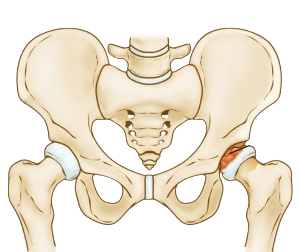
Legg-Calve-Perthes Disease prevents the end of the femur bone from growing as it actively fits into the hip socket of the child. This means that it can cause the bone to break and then again restore after years. Moreover, this condition has an age limit of 2 to 12.
It develops when the femur bone, that is the head of the ball in the socket of the hip joint, stops the supply of blood. As a result, this condition can severely affect the tissue, because when the blood supply stops from flowing to the bone, the blood cannot survive for long, and it gradually starts to die.
After some time, when the blood starts to flow again, it slowly returns to heal. Although, it is not sure that it will take its original shape and size.
Legg-Calve-Perthes Disease: Multiple Names and Diagnosis
Legg-Calve-Perthes Disease in India is not a single-name disease, as it can be diagnosed with several other names as well. In fact, Osteochondroses is a term that belongs to a group of disorders related to Legg-Calve-Perthes. This condition specifically involves the degeneration and regeneration of the growing end of the femur bone.
However, the reason for LCPD disease is still unidentified. Additionally, this disease can change the shape of the bone, and it is completely dependent on how much the bone has been affected over the years. Despite this, it is a long-term prognosis that provides good results.
Some other names of this disease include:
- Perthes disease
- Perthes syndrome
- Legg-Calve
- Legg-Perthes
- Calve-Perthes
- Coxa Plana
Common symptoms of Perthes
As it has no clear signs of this disease. But doctors have researched so far and had developed some symptoms of legg calve perthes disease includes:
Hip pain: Hip pain is one of the common signs of LCPD. When the blood supply stops and tissue starts to degenerate. The pain becomes worse as time passes.
A limp: A common symptom if the child keeps the body weight only on a single leg while walking. This situation can appear before the child feel any pain.
Referred pain: Related pains in the areas like knees, thighs, Pelvises or abdomens.
Leg pain: Muscle spasms and pain can be experienced in kids. Leg muscles are connected to their hip joints.
LCPD symptoms that may occur later:
- Limited range of motion
- Trendelenburg gait
- Muscle atrophy
- Leg length discrepancy
Risk factors of LCPD
One of the common risks among the kids having LCPD is blood clotting disorder. Traumatic injury or repetitive strain injury can prevent the blood from flowing due to swelling. Inherited gene mutations are also seen among kids.
Risk factors that may increase the chance of LCPD includes:
- Low birth weight
- Short stature
- Abnormalities teeth
- Late growth of skeletal
- Blood clotting disorder
- HIV infection
- Passive smoking
- Inherited mutations in the COL2A1 gene
Treatment Approaches for Legg-Calve-Perthes Disease
Treatment for Legg-Calve-Perthes depends upon various factors such as the severity of the disease , stage and the age of the child. Less intervention is needed for the kids whose bones grow faster. Some of the treatment includes:
- Physical therapy
- Surgery
- Nonsteroidal anti inflammatory drugs
- Traction
- Limited activity and weight bearing
- Casts or braces
Cost of Legg-Calve-Perthes Disease in India
The cost of Legg-Calve-Perthes disease treatment depends upon various factors. Additionally, it varies based on the type of treatment the patient is opting for. Top orthopedic surgeons in India have high consultation fees. . Moreover, the choice of hospital, city, specific doctor preference, and other factors also influence the total cost of treatment.
However, despite these variations, the cost remains affordable and significantly lower compared to other Western nations.
Summary
Legg-Calve-Perthes Disease prevents the end of the femur bone from growing as it actively fits into the hip socket of the child.
It develops when the femur bone, that is the head of the ball in the socket of the hip joint, stops the supply of blood.
This condition specifically involves the degeneration and regeneration of the growing end of the femur bone.
B.U.M.S, M.D. (NAT) | Reg No. 9153 | Ex. Secretary & Treasurer, N.I.M.A.
Qualified healthcare professional in Unani and Naturopathic medicine with deep expertise in traditional healthcare systems, patient-centered clinical care, and medical content review.