
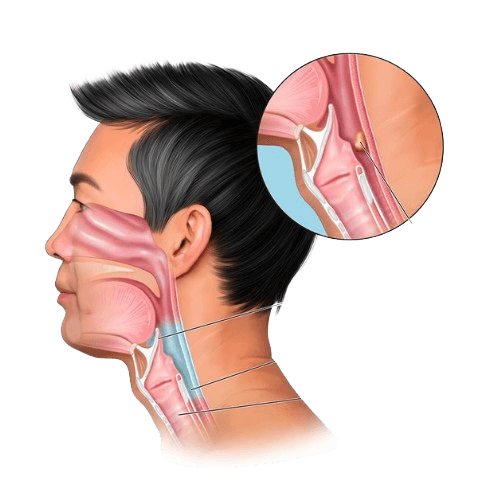
Overview
Laryngeal and hypopharyngeal cancers arise from mucosal surfaces of the voice box and lower pharynx and are strongly linked to tobacco and alcohol exposure.
Presentation ranges from hoarseness and throat pain to swallowing difficulty and neck lumps.
Optimal care is multidisciplinary — combining organ-preserving surgery, radiotherapy and systemic therapy tailored to stage and patient goals.
Overview And Clinical Background
Anatomy, subsite differences and risk factors
The larynx includes the glottis, supraglottis and subglottis, while the hypopharynx lies below and behind the larynx; cancers here vary in presentation and prognosis.
Major risk factors are smoking, heavy alcohol use, and HPV for select oropharyngeal sites.
- Subsites: Glottic (voice changes), supraglottic (throat pain, swallowing issues) and hypopharyngeal (dysphagia, neck nodes).
- Risk factors: Tobacco, alcohol, poor oral hygiene, and HPV in some head and neck cancers.
- Clinical impact: Early glottic cancers often present with isolated hoarseness and better outcomes.
Symptoms, Signs And Presentation
Common symptoms include persistent hoarseness, throat pain, difficulty swallowing, referred ear pain, and neck lymph node enlargement.
Because early symptoms are subtle, persistent voice or swallowing changes warrant prompt evaluation.
- Hoarseness: Persistent change in voice quality or loss of voice.
- Dysphagia and odynophagia: Difficulty or pain on swallowing that often progresses.
- Neck mass: Painless enlarged lymph node may indicate regional spread.
Diagnosis Methods And Investigations
Endoscopy, imaging and biopsy
Diagnosis requires direct laryngoscopy or nasoendoscopy with biopsy; CT/MRI and PET-CT stage local invasion and nodal disease.
Dental and nutritional assessments are essential before definitive therapy.
- Endoscopic biopsy: Direct visualization with tissue sampling under anesthesia.
- Cross-sectional imaging: CT or MRI to evaluate local extent and cartilage invasion.
- PET-CT and neck ultrasound: Assess regional nodes and distant metastasis for staging.
Treatment Options And Surgical Techniques
Treatment is stage- and site-specific: early glottic lesions may be treated with radiation or transoral laser surgery to preserve voice.
Advanced disease often needs combination therapy — open or transoral surgery with neck dissection plus adjuvant radiotherapy/chemoradiation when indicated.
- Organ-preserving options: Radiotherapy or transoral endoscopic resection for selected early tumors.
- Surgical resection: Partial or total laryngectomy and neck dissection for bulky or invasive disease.
- Multimodal therapy: Concurrent chemoradiation for organ preservation in selected advanced cases.
Recovery, Risks And Prognosis
Recovery includes voice and swallow rehabilitation; after extensive surgery, speech restoration techniques (voice prosthesis) and intensive physiotherapy support quality of life.
Prognosis depends on subsite and stage — early glottic cancers have excellent cure rates while hypopharyngeal cancers often present late and carry a more guarded prognosis.
Why Choose Us
CureU Healthcare offers coordinated head and neck oncology care — expert ENT and reconstructive surgeons, precision radiotherapy, speech and swallowing therapists, and comprehensive nutritional support.
We balance cure with organ function and rehabilitation.
Conclusion
Laryngeal and hypopharyngeal cancers are best managed early by a multidisciplinary team focused on cure and functional preservation.
Prompt assessment of persistent hoarseness or swallowing difficulty improves outcomes.

B.U.M.S, M.D. (NAT) | Reg No. 9153 | Ex. Secretary & Treasurer, N.I.M.A.
Qualified healthcare professional in Unani and Naturopathic medicine with deep expertise in traditional healthcare systems, patient-centered clinical care, and medical content review.