Overview
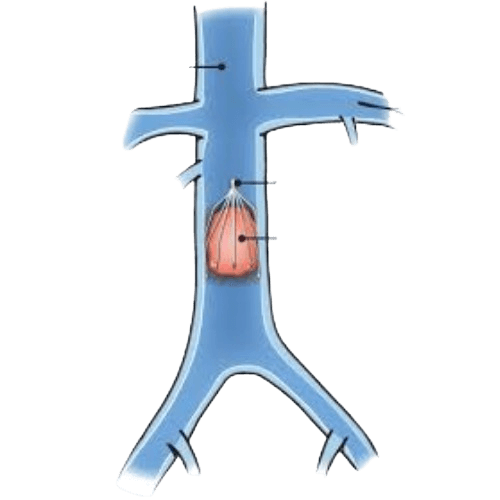
An inferior vena cava (IVC) filter is a small, cage-like device placed percutaneously into the IVC to intercept venous thromboemboli traveling from the legs to the lungs.
Indications include acute venous thromboembolism with contraindication to anticoagulation, recurrent emboli despite therapy, or temporary protection during high-risk periods.
Filters may be permanent or retrievable; careful selection and follow-up minimize long-term complications.
Overview And Clinical Background
Mechanical protection against pulmonary embolism
IVC filters provide a mechanical barrier to large emboli while allowing normal venous return through the filter struts.
Their role is adjunctive to medical therapy and tailored to patient-specific thrombotic and bleeding risks.
- Primary purpose: Prevent pulmonary embolism in patients who cannot receive anticoagulation, have failed anticoagulation, or require temporary protection during high-risk procedures.
- Filter types: Retrievable filters are used when short-term protection is needed; permanent filters remain indefinitely and are chosen when long-term risk persists.
- Risk-benefit decision: Placement decisions balance immediate PE protection against potential long-term filter-related risks such as thrombosis, migration or caval perforation.
Symptoms, Signs And Presentation
Indications are usually clinical rather than symptomatic — patients with deep vein thrombosis (DVT) at high risk of embolization or with bleeding that precludes anticoagulation are evaluated for filter placement.
Post-procedure, most patients are asymptomatic though insertion-site discomfort can occur.
- Pre-placement signs: Active proximal DVT with contraindication to anticoagulation, recurrent emboli on therapy, or perioperative high-risk scenarios often prompt consultation for filter insertion.
- Immediate post-procedure: Mild groin or neck site soreness depending on access route; most patients mobilize quickly and resume normal activities within days.
- Late issues: Filter thrombosis may present as leg swelling or recurrent DVT; filter migration is rare but can cause atypical symptoms if it occurs.
Diagnosis Methods And Investigations
Pre-procedure imaging and risk assessment
Before insertion, ultrasound confirms DVT location and extent while venography or CT venography maps caval anatomy in complex cases.
Careful assessment determines the optimal access site and filter type.
- Venous ultrasound: Defines the presence, extent and chronicity of DVT and helps determine the urgency and likely benefit of filter protection.
- Cross-sectional imaging: CT venography or contrast venography is useful when anatomic variants or thrombosis near the intended filter landing zone are suspected.
- Laboratory workup: Coagulation profile and renal function are checked to guide contrast use and peri-procedural anticoagulation planning.
Treatment Options And Surgical Techniques
Filter insertion is performed percutaneously under fluoroscopic guidance via jugular or femoral venous access.
The device is positioned in the infrarenal IVC in most cases with deployment confirmed by imaging.
- Access and deployment: A sheath is advanced into the IVC, the filter is introduced and deployed at the chosen level (usually below the renal veins) with immediate imaging confirmation of position and expansion.
- Retrieval: Retrievable filters are removed via endovascular snare when the embolic risk subsides and anticoagulation is safe; timely retrieval reduces long-term complications.
- Adjunct care: Anticoagulation is resumed when safe; surveillance ultrasound or CT can monitor for filter-related thrombosis or malposition.
Recovery, Risks And Prognosis
Most patients recover rapidly with short observation; major complications are uncommon but include access-site hematoma, infection, filter migration, caval perforation, or filter-associated thrombosis.
Long-term outcomes are good when filters are used appropriately and retrieved when feasible.
- Early recovery: Ambulation usually within hours, light activity for 24–48 hours, and discharge the same day or after overnight observation depending on comorbidities.
- Potential complications: Filter thrombosis may necessitate anticoagulation or thrombolysis; rare migration or fracture events require specialist assessment and possible intervention.
- Prognosis: When placed for appropriate indications, filters reduce early PE risk; long-term prognosis depends on underlying thrombotic disease and management of risk factors.
Why Choose Us
CureU Healthcare offers experienced endovascular teams, modern imaging suites for safe placement and retrieval, and coordinated follow-up pathways to ensure filters are used and removed appropriately.
We combine individualized risk assessment with technical expertise to protect patients from pulmonary embolism while minimising complications.
Conclusion
IVC filter insertion is a targeted, minimally invasive option to prevent pulmonary embolism when anticoagulation is contraindicated or insufficient.
With careful selection, modern devices and structured follow-up at CureU Healthcare, patients receive effective short-term protection and appropriate long-term management.


