
Overview
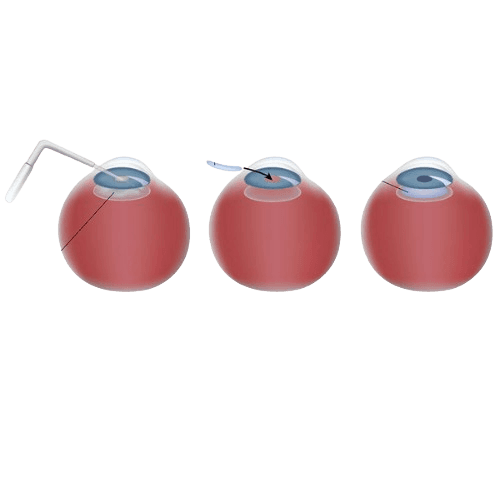
Intraocular Implants, or Intraocular Lenses (IOLs), are artificial lenses inserted inside the eye to replace the natural lens removed during cataract or refractive surgery.
These implants focus light correctly on the retina, offering clear vision without significant optical distortion. Modern IOLs are customized to patient needs, from monofocal and multifocal to toric lenses correcting astigmatism.
Overview And Clinical Background
Artificial lens replacement for clarity
IOLs are made of biocompatible materials and designed to last a lifetime.
They’re essential for restoring visual focus after cataract removal or correcting refractive errors surgically.
- Purpose:: To restore or improve vision after natural lens removal.
- Material:: Acrylic or silicone biocompatible polymers.
- Placement:: Inserted into the capsular bag inside the eye.
Symptoms, Signs And Presentation
IOLs are recommended for patients with cataracts, lens opacities, or high refractive errors not manageable with external lenses.
Post-surgery, patients experience clearer, sharper, and more comfortable vision.
- Blurred or cloudy vision:: Due to cataract formation or lens opacity.
- Dependence on glasses:: Reduced after IOL implantation.
- Improved contrast sensitivity:: Notable in modern multifocal designs.
Diagnosis Methods And Investigations
Pre-surgical eye evaluation
Before IOL selection, precise eye measurements ensure optimal outcomes.
Biometry and corneal mapping are key for power calculation.
- Biometry:: Calculates IOL power using axial length and corneal curvature.
- Keratometry:: Measures corneal curvature for astigmatic correction.
- OCT scan:: Assesses macular and retinal health before surgery.
Treatment Options And Surgical Techniques
IOL implantation is performed during cataract or refractive lens surgery under local anesthesia.
The natural lens is emulsified and replaced with a clear artificial one.
- Phacoemulsification:: Ultrasound-based removal of the natural lens.
- IOL insertion:: Foldable lens implanted through a micro incision.
- Lens types:: Monofocal, multifocal, extended depth-of-focus, and toric variants.
Recovery, Risks And Prognosis
Recovery is quick, usually within a few days.
Risks are minimal but may include temporary inflammation or lens displacement, managed with medication.
Visual outcomes are excellent with proper lens selection.
Why Choose Us
CureU Healthcare’s surgeons use precision IOL calculation and advanced surgical tools to ensure seamless vision restoration.
Our wide range of premium lenses lets you regain sight suited to your lifestyle.
Conclusion
Intraocular Implants offer safe, long-term correction for cataract and refractive issues.
With expert care at CureU Healthcare, you can achieve lasting visual clarity and freedom from glasses.

B.U.M.S, M.D. (NAT) | Reg No. 9153 | Ex. Secretary & Treasurer, N.I.M.A.
Qualified healthcare professional in Unani and Naturopathic medicine with deep expertise in traditional healthcare systems, patient-centered clinical care, and medical content review.