Overview
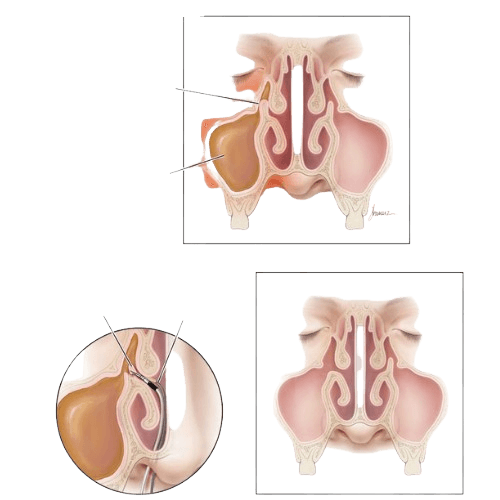
Functional Endoscopic Sinus Surgery (FESS) uses nasal endoscopes and micro-instruments to remove disease and open natural sinus drainage pathways while preserving normal anatomy.
It is indicated for chronic rhinosinusitis refractory to medical therapy, recurrent sinus infections, obstructive polyps, or to access complex sinus anatomy.
FESS aims to improve ventilation, reduce infection frequency, and preserve mucosal function with less morbidity than open procedures.
Overview And Clinical Background
Endoscopic, function-preserving sinus surgery
FESS revolutionized sinus surgery by enabling targeted removal of obstructing tissue and diseased mucosa under endoscopic visualization.
The procedure focuses on restoring physiology rather than wide tissue excision, reducing recovery time and improving symptom control in chronic sinusitis and polyposis.
- Indications: Persistent sinusitis despite maximal medical therapy, nasal polyps causing obstruction, recurrent acute infections, mucocele, or as part of skull-base or orbital access in selected cases.
- Principle: Improve mucociliary clearance by opening natural ostia and removing localized disease while preserving healthy mucosa and supporting structures to maintain nasal function.
- Benefits: Less invasive than open approaches, shorter hospital stay, quicker return to activities, and better preservation of nasal physiology with targeted disease control.
Symptoms, Signs And Presentation
Patients considered for FESS typically suffer chronic nasal blockage, facial pressure, reduced smell, recurrent infections, or obstructive sleep-related nasal symptoms.
Examination and imaging confirm extent of disease and guide staging.
- Chronic nasal obstruction: Long-standing blockage not responding to topical steroids or antibiotics that impairs sleep and daily function.
- Facial pressure or pain: Persistent pressure, fullness or pain over the sinuses often worse with bending or changes in ambient pressure, indicating retained secretions.
- Olfactory loss and recurrent infections: Reduced sense of smell and recurrent sinus infections despite treatment suggest operative clearance may be beneficial.
Diagnosis Methods And Investigations
Endoscopy and imaging
Assessment includes nasal endoscopy to visualise mucosa and discharge, and CT sinus imaging to map obstruction patterns and anatomic variants.
Allergy testing and medical optimisation are part of preoperative planning.
- Nasal endoscopy: Office-based endoscopic exam reveals polyps, purulence, or structural blocks and helps target surgical areas for symptom relief.
- CT scan of paranasal sinuses: Low-dose CT provides a roadmap of sinus anatomy, disease extent, and variants such as concha bullosa or narrow ostia that influence surgical strategy.
- Medical optimisation: Pre-op steroid therapy, treatment of allergic triggers and control of coexisting conditions such as asthma reduce postoperative inflammation and improve outcomes.
Treatment Options And Surgical Techniques
FESS is performed under general anesthesia using endoscopes and powered instruments to remove obstructing tissue, enlarge drainage pathways, and address specific pathologies like polyps or mucoceles.
Surgeons tailor the extent of surgery to disease severity while preserving normal structures.
- Endoscopic polypectomy and ostial dilation: Targeted removal of polyps and widening of natural sinus openings restores ventilation and allows topical medications to reach the sinus mucosa more effectively.
- Image guidance: In complex or revision cases, intraoperative navigation systems increase safety by correlating endoscopic view with preoperative CT for precise targeting.
- Adjunct procedures: Septoplasty, turbinate reduction or balloon sinuplasty may be combined when structural issues contribute to obstruction and symptoms.
Recovery, Risks And Prognosis
Most patients experience symptom improvement within days to weeks, with full mucosal healing over months.
Risks include bleeding, infection, cerebrospinal fluid leak in rare anatomically challenging cases, and adhesion formation; meticulous technique and postoperative debridement reduce these risks.
- Early recovery: Nasal packing is rarely required; saline irrigations, short steroid courses and clinic debridement support healing and symptom relief over the first weeks.
- Complications: Minor bleeding and crusting are common but transient; serious complications are uncommon in experienced centres and are minimized by image guidance and careful anatomy recognition.
- Long-term outcome: Many patients have durable symptom control and reduced infection frequency when surgery is combined with ongoing medical management for inflammation or allergy.
Why Choose Us
CureU Healthcare offers ENT surgeons trained in advanced endoscopic techniques, image-guided navigation, and multidisciplinary care for upper airway disease.
Our protocol emphasises preoperative optimisation, precise surgery and structured postoperative follow-up to maximise symptom relief and minimise recurrence.
Conclusion
FESS is a targeted, effective solution for chronic sinus disease refractory to medical therapy.
When combined with medical management and specialist follow-up at CureU Healthcare, it restores sinus function and improves quality of life for most patients.


