Overview
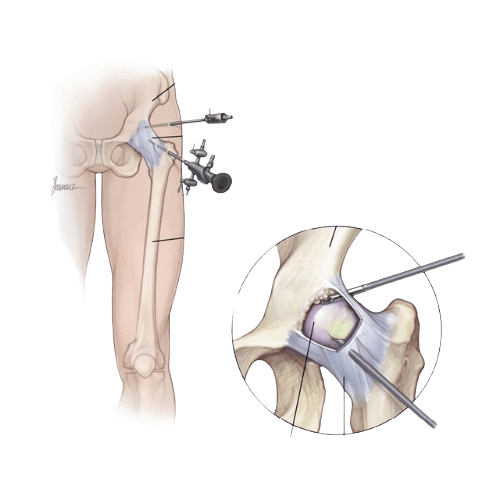
Femoroacetabular impingement (FAI) surgery treats a hip condition where extra bone growth causes friction between the hip joint’s ball and socket.
This abnormal contact damages cartilage, leading to pain and stiffness.
Surgical correction reshapes the bone and restores smooth motion, reducing the risk of arthritis in young athletes or growing teens.
Overview And Clinical Background
Understanding Hip Impingement
FAI occurs when the hip bones don’t fit perfectly together, causing repetitive friction during movement.
It can be cam-type (extra bone on the femur), pincer-type (overcoverage of the socket), or mixed.
Over time, this leads to labral tears and cartilage wear, especially in active individuals.
- Common type:: Cam impingement seen in active teenagers and athletes.
- Causes stiffness and groin pain during activity.
- Untreated FAI:: May progress to early osteoarthritis.
Symptoms, Signs And Presentation
Patients report deep groin pain, stiffness, and clicking sensations during hip motion.
Pain worsens with sitting, bending, or sports.
Some experience reduced hip rotation or catching sensations.
- Common symptom:: Groin or thigh pain during movement.
- Clicking or catching inside the hip joint.
- Red flag:: Severe motion restriction suggesting cartilage damage.
Diagnosis Methods And Investigations
Imaging And Functional Evaluation
Diagnosis combines clinical examination and imaging studies.
X-rays, MRI, or CT scans identify bone shapes and cartilage status.
Sometimes diagnostic injections help confirm the hip as the pain source.
- X-ray:: Reveals bone overgrowth or shape abnormalities.
- MRI:: Shows labral tears and cartilage damage.
- 3D imaging helps surgeons plan precise bone reshaping.
Treatment Options And Surgical Techniques
Initial management includes rest, physiotherapy, and anti-inflammatory medicines.
If symptoms persist, arthroscopic or open surgery is performed to reshape the bones, repair labrum, and relieve impingement.
Recovery involves guided physiotherapy to regain strength and motion.
- Conservative:: Activity modification and physical therapy first-line.
- Arthroscopic surgery:: Minimally invasive reshaping of bone and labral repair.
- Open surgery reserved for complex deformities.
Recovery, Risks And Prognosis
Most patients walk with crutches for a few weeks after surgery.
Full recovery takes 3–6 months with physical therapy.
Risks include stiffness or residual pain, but long-term results are excellent when treated early.
Why Choose Us
CureU Healthcare offers advanced pediatric orthopedic care with modern arthroscopic techniques.
Our rehabilitation programs ensure safe return to activity and long-term joint health.
Conclusion
FAI surgery restores natural hip movement and prevents early arthritis.
CureU Healthcare blends precision surgery with personalized recovery care.


