Overview
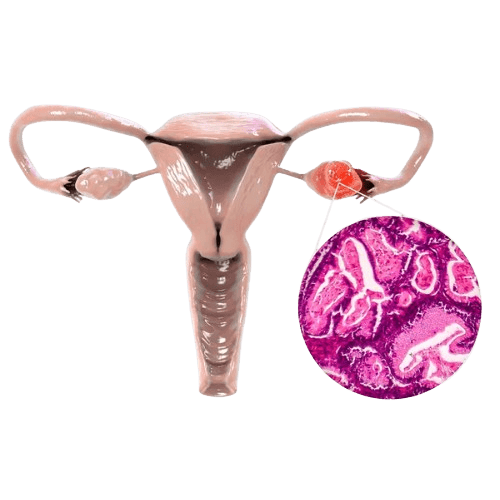
Fallopian tube cancer originates in the epithelial cells of the tubes connecting the ovaries to the uterus.
It often presents with symptoms similar to ovarian cancer and may spread to nearby reproductive organs. Early detection and surgery can significantly improve outcomes.
Overview And Clinical Background
Fallopian tube cancer is uncommon and often detected at later stages due to subtle symptoms.
It may arise from precursor lesions similar to those seen in ovarian carcinoma.
- Origin:: Usually starts in the epithelial lining of the fallopian tube.
- Frequently associated with BRCA gene mutations.
- Spread:: May extend to the ovaries, uterus, or peritoneal cavity.
Symptoms, Signs And Presentation
Symptoms are often vague and mimic other gynecologic disorders.
Awareness helps in early evaluation.
- Common symptom:: Pelvic pain or pressure.
- Abnormal vaginal bleeding or discharge.
- Red flag:: Rapid abdominal distension or unexplained weight loss.
Diagnosis Methods And Investigations
Imaging And Laboratory Tests
Diagnosis requires a combination of imaging, tumor markers, and biopsy for confirmation.
Early detection is critical for treatment planning.
- Imaging:: Ultrasound and MRI to visualize pelvic masses.
- Lab tests:: CA-125 and HE4 markers for suspicion of malignancy.
- Histopathology after surgical biopsy confirms the diagnosis.
Treatment Options And Surgical Techniques
Treatment involves surgical removal of the affected structures with or without chemotherapy.
Minimally invasive techniques may be used in early stages.
- Conservative:: Observation in early, low-grade lesions only.
- Minimally invasive options:: Laparoscopic or robotic salpingectomy and staging.
- Cytoreductive surgery followed by chemotherapy for advanced disease.
Recovery, Risks And Prognosis
Recovery depends on the stage and extent of disease.
With timely intervention, 5-year survival rates can reach 80% in early-stage cases.
Why Choose Us
CureU Healthcare offers expert gynecologic oncology surgeons and state-of-the-art minimally invasive technology.
Our multidisciplinary approach ensures precise care and compassionate recovery.
Conclusion
Fallopian tube cancer is treatable when detected early.
Prompt evaluation and modern surgical methods improve patient survival and quality of life.