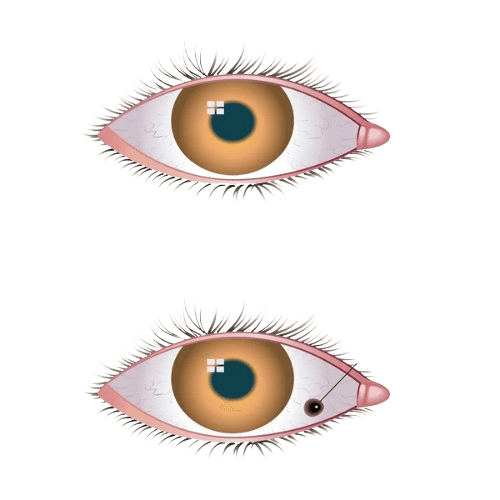
Overview
Eye cancer refers to malignant growths within or around the eye, including retinoblastoma in children and ocular melanoma in adults.
Early diagnosis through ophthalmic evaluation and imaging improves both survival and vision outcomes.
Management may include surgery, radiation, chemotherapy, or laser therapy based on type and extent.
Overview And Clinical Background
Malignant tumors of the eye
Primary eye cancers include retinoblastoma and ocular melanoma, while secondary eye tumors arise from metastases.
Early detection is crucial to prevent spread and preserve vision.
- Retinoblastoma: Pediatric eye cancer arising from retinal cells, often hereditary.
- Ocular melanoma: Common adult primary eye cancer originating from uveal melanocytes.
- Metastatic tumors: Spread from breast or lung cancers to the choroid layer.
Symptoms, Signs And Presentation
Symptoms depend on tumor location and type.
Some may be asymptomatic in early stages.
- Vision loss: Gradual or sudden decline in vision.
- Visible mass or glow: White pupillary reflex (leukocoria) in children with retinoblastoma.
- Pain or redness: Occurs when tumor causes inflammation or secondary glaucoma.
Diagnosis Methods And Investigations
Ophthalmic imaging and biopsy
Diagnosis relies on clinical examination and specialized imaging; biopsy is done only when safe and necessary.
- Fundoscopy and slit-lamp exam: Direct visualization of intraocular lesions.
- Ultrasound and MRI: Assess tumor extent and orbital involvement.
- Genetic testing: For hereditary retinoblastoma or familial risk screening.
Treatment Options And Surgical Techniques
Treatment aims to remove or control the tumor while preserving vision and life.
Options include chemotherapy, laser therapy, radiation, or enucleation in advanced cases.
- Chemotherapy: Systemic or intra-arterial to shrink tumors.
- Laser or cryotherapy: For small localized lesions.
- Surgery or enucleation: Removal of the eye in extensive disease to prevent metastasis.
Recovery, Risks And Prognosis
Prognosis depends on cancer type and stage.
Retinoblastoma treated early has >90% survival; ocular melanoma outcomes vary by size and spread.
Why Choose Us
CureU Healthcare provides access to advanced ophthalmic oncology with precision imaging, targeted chemotherapy, and reconstructive options.
Our focus is preserving sight and preventing disease spread.
Conclusion
Eye cancers demand urgent evaluation.
Early, specialized treatment preserves both life and vision.