Overview
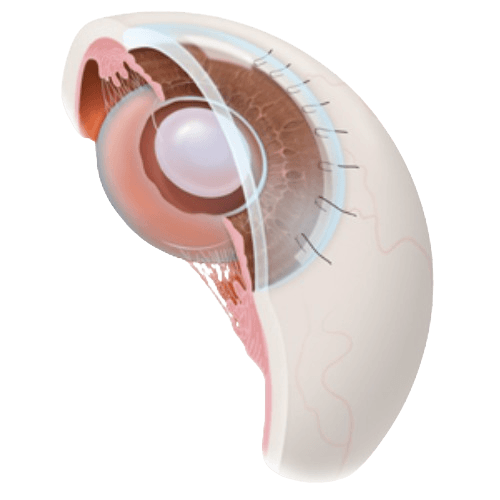
Extracapsular Cataract Extraction (ECCE) is a surgical approach in which the cataractous lens nucleus is removed while the posterior capsule is left intact to support an artificial intraocular lens.
ECCE remains valuable for very dense or mature cataracts where phacoemulsification is not suitable; it restores vision reliably when performed with meticulous technique.
Overview And Clinical Background
Traditional cataract removal method
ECCE is a tried-and-true technique especially useful for hard, mature cataracts or when resources limit phacoemulsification.
It provides a stable platform for IOL implantation by conserving the posterior capsule.
- Indication:: Dense or mature cataracts unsuitable for phacoemulsification.
- Approach:: Larger incision with manual extraction of the lens nucleus.
- IOL support:: Posterior capsule retained to hold the intraocular lens.
Symptoms, Signs And Presentation
Patients present with progressive blurring, glare, and difficulty with near or distance tasks.
Dense cataracts may show a white or brunescent lens on exam.
- Blurry vision:: Progressive loss of clarity affecting daily activities.
- Glare and halos:: Light scatter from the opaque lens causes discomfort in bright conditions.
- Difficulty reading or driving:: Functional impairment that prompts surgery.
Diagnosis Methods And Investigations
Preoperative assessment
Comprehensive eye exam and biometric measurements are essential to plan incision, IOL power, and anticipate complications.
Retinal health is checked to forecast visual potential.
- Slit-lamp exam:: Evaluates cataract density and anterior segment health.
- Biometry:: Axial length and keratometry determine IOL power.
- Dilated fundus exam:: Assesses retina and macula to set realistic outcomes.
Treatment Options And Surgical Techniques
ECCE involves a controlled incision, removal of the lens nucleus, and implantation of an IOL.
Modern ECCE uses refined suturing and wound construction to promote stability and faster recovery.
- Incision creation:: Scleral or corneal incision sized to deliver the nucleus.
- Nucleus extraction:: Manual expression or assisted removal of the dense lens.
- IOL implantation and closure:: Artificial lens placed in the capsular bag and wound closed with sutures.
Recovery, Risks And Prognosis
Vision often improves within days, though full stabilization can take weeks.
Risks include infection, posterior capsule opacification, and wound-related complications; careful technique and follow-up minimize these.
Why Choose Us
CureU Healthcare’s cataract team is skilled in both phaco and ECCE techniques, ensuring safe outcomes even for challenging cataracts.
We provide personalized lens choices and meticulous postoperative care.
Conclusion
ECCE is a reliable option for dense cataracts that require manual extraction.
With experienced surgeons and careful follow-up at CureU Healthcare, patients regain meaningful vision and function.