Overview
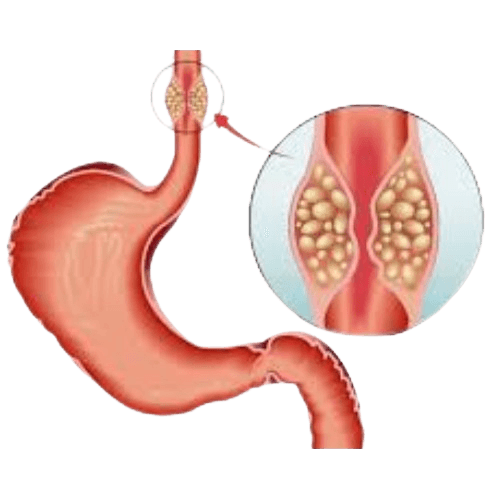
Esophageal cancer develops in the lining of the oesophagus and commonly presents with progressive dysphagia.
Major subtypes are squamous cell carcinoma and adenocarcinoma, each with distinct risk factors and treatment pathways.
Management usually involves multimodality therapy including surgery, chemotherapy, and radiation for the best chance of cure.
Overview And Clinical Background
Subtypes and risk profiles
Adenocarcinoma is linked to reflux and Barrett’s oesophagus, while squamous cell carcinoma is associated with smoking and alcohol.
Incidence patterns vary geographically and influence screening and prevention strategies.
- Types: Squamous cell carcinoma and adenocarcinoma are the main histologic subtypes.
- Risk factors: Smoking, alcohol, chronic reflux, obesity, and Barrett’s oesophagus.
- Natural history: Often presents late due to initially subtle symptoms.
Symptoms, Signs And Presentation
Dysphagia (difficulty swallowing) for solids progressing to liquids is the hallmark symptom.
Weight loss, odynophagia, and voice changes may also occur as disease advances.
- Progressive dysphagia: Initial trouble with solid foods, later with liquids.
- Weight loss: Unintentional loss due to swallowing difficulty and reduced intake.
- Pain or hoarseness: Chest pain, odynophagia, or recurrent laryngeal nerve involvement in advanced cases.
Diagnosis Methods And Investigations
Endoscopy, biopsy and staging scans
Upper GI endoscopy with biopsy confirms diagnosis; PET-CT and endoscopic ultrasound stage disease and assess resectability.
Accurate staging determines the multimodal approach.
- Endoscopic biopsy: Tissue diagnosis obtained via upper GI endoscopy.
- Endoscopic ultrasound: Assesses depth of invasion and regional nodes.
- Cross-sectional imaging: CT/PET to detect distant spread or plan therapy.
Treatment Options And Surgical Techniques
Curative treatment often requires combined therapy — neoadjuvant chemoradiation followed by oesophagectomy for resectable disease.
Palliative stenting and systemic therapy relieve symptoms in advanced cases.
- Neoadjuvant therapy: Chemoradiation before surgery improves resection rates and survival.
- Surgery: Transthoracic or transhiatal oesophagectomy with reconstruction (gastric pull-up).
- Palliation: Endoscopic stenting, radiotherapy, or systemic therapy to relieve dysphagia.
Recovery, Risks And Prognosis
Recovery from oesophagectomy is significant and requires specialised perioperative care and nutrition.
Prognosis depends on stage; early resectable tumours have substantially better outcomes than advanced disease.
Why Choose Us
CureU Healthcare offers coordinated thoracic oncology care with experienced surgeons, perioperative nutrition support, and access to multimodal therapies.
We focus on reducing surgical risk and restoring swallowing and quality of life.
Conclusion
Esophageal cancer requires prompt evaluation when dysphagia appears.
Multidisciplinary treatment combining chemoradiation and skilled surgery gives the best chance for long-term control.