
Overview
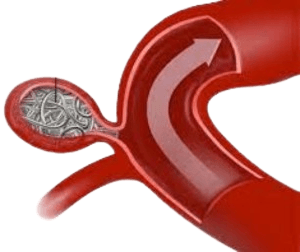
Endovascular coiling is used to block blood flow into an aneurysm. An aneurysm, in other words, is a weakened area in the wall of an artery. This procedure, also known as endovascular embolization, is performed to address this issue. In case the aneurysm ruptures or gets broken, it comes leading to a life-threatening condition due to bleeding and brain damage. Therefore, preventing the flow of blood into an aneurysm helps to keep it from breaking or rupturing.
To perform the procedure, healthcare professionals use a thin tube called a catheter into a groin artery for endovascular coiling. From there, the catheter moves into the affected brain artery and then puts the coil in place. X-ray imaging helps to guide the catheter into the artery. The coils are made of soft platinum metal and are shaped like a spring. Additionally, the coils are very small and thin in shape. Sometimes, the coils are used with stents to stop the coils from moving out of the aneurysm.
Moreover, endovascular coiling in India is used to treat conditions called arteriovenous malformations. An AVM is a tangle of blood vessels that causes an abnormal link between an artery and a vein. Notably, this can take place anywhere in the brain or spinal cord.
Who is eligible for Endovascular coiling
Endovascular coiling is a minimally invasive procedure that is useful to block blood flow to an aneurysm and also reduce the risk of rupture and bleeding.
Coiling can be recommended for the patient diagnosed with certain conditions that includes:
Ruptured aneurysm: If an aneurysm ruptures or breaks, it releases blood into the space between the brain and skull, creating subarachnoid hemorrhage. Due to this, the risk of bleeding again is comparatively higher within the first 14 days after an initial brain bleed. In such cases immediate treatment like coiling is a must.
Unruptured aneurysm: Most of the aneurysms do not cause symptoms, they are generally detected in an imaging scan of the brain. Treatment such as coiling may be considered for an unruptured aneurysm depending on its size, location and other factors that increase the risk of rupture.
Risk of endovascular coiling
One of the common risks for allergic reactions to the dye that is use to detect aneurysm on an X-ray. It is important to tell the radiologist if you are allergic or sensitive to any medicine, contrast dye or iodine. Some of the common risks and complications in endovascular coiling include:
- Loss of consciousness
- The coils poking through the aneurysm or a blood vessel
- Bleeding
- Blood clot
- Paralysis
- Stroke
- Swelling caused by a collection of blood
- Loss of the ability to speak or speech problem
- Infection
- Rupture of aneurysm
- Hematoma in the groin
Benefits of endovascular coiling
Some of the common benefits of coiling, as it is a minimally invasive procedure that does require a larger incision.
- Minimally invasive procedures gives the option to sleep or awake during the treatment
- Quick and easy recovery
- Does not expose the risks of traditional surgery
Cost of endovascular coiling in India
The cost of endovascular coiling in India is affordable as well as rich in medical facilities. From tip to toe means from the initial stage of the treatment till the surgery or any critical cases can be easily handled by the top surgeons of India with ease. India is a hub of medical facilities that is providing medical care at the most cost effective range that does not make a hole in the pocket.
Top neurosurgeons in India provide the best services and greater precision to their cases.
However, the overall cost of the treatment may vary depending on several factors. These factors include the surgeon’s expertise, the type of implant, the location of the hospital, and more.
Summary
Endovascular coiling is used to block blood flow into an aneurysm. An aneurysm, in other words, is a weakened area in the wall of an artery. To perform the procedure, healthcare professionals use a thin tube called a catheter into a groin artery for endovascular coiling.
Endovascular coiling is a minimally invasive procedure that is useful to block blood flow to an aneurysm and also reduce the risk of rupture and bleeding.

B.U.M.S, M.D. (NAT) | Reg No. 9153 | Ex. Secretary & Treasurer, N.I.M.A.
Qualified healthcare professional in Unani and Naturopathic medicine with deep expertise in traditional healthcare systems, patient-centered clinical care, and medical content review.