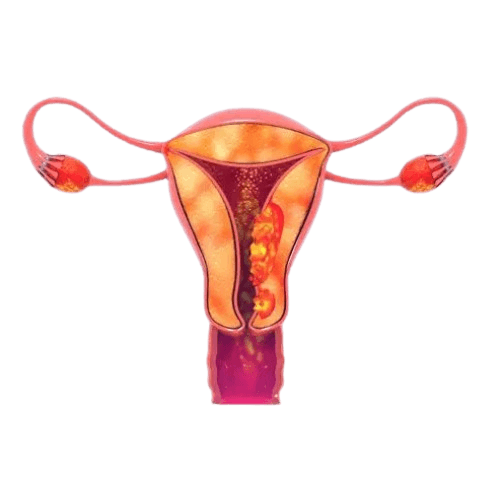
Overview
Endometrial cancer originates from the lining of the uterus and most commonly affects postmenopausal women.
Abnormal uterine bleeding is the usual presenting symptom, prompting ultrasound and biopsy.
Management is stage-directed, frequently curative with surgery and supplemented by radiation or systemic therapy when indicated.
Overview And Clinical Background
Hormone-driven uterine malignancy
Most endometrial cancers are adenocarcinomas related to excess estrogen exposure.
Risk factors include obesity, unopposed estrogen, polycystic ovarian syndrome, and tamoxifen use.
- Origin: Malignancy of the endometrial glandular cells.
- Risk factors: Obesity, late menopause, unopposed estrogen therapy, and Lynch syndrome.
- Detection: Often detected early because of abnormal bleeding.
Symptoms, Signs And Presentation
The most common symptom is abnormal vaginal bleeding, especially after menopause.
Other signs include pelvic pain or unusual discharge when disease is more advanced.
- Abnormal bleeding: Postmenopausal bleeding or intermenstrual spotting in premenopausal women.
- Pelvic symptoms: Cramping, pelvic ache, or persistent discharge.
- Red flag: Any postmenopausal bleeding requires prompt evaluation.
Diagnosis Methods And Investigations
Ultrasound and endometrial sampling
Transvaginal ultrasound assesses endometrial thickness and guides biopsy.
Hysteroscopic sampling or dilation and curettage provides definitive histology and helps stage disease with imaging.
- Endometrial biopsy: Outpatient biopsy to obtain tissue for histology.
- Imaging: Pelvic MRI or CT for local staging and spread assessment.
- Molecular tests: Pathology includes grade and markers influencing adjuvant therapy decisions.
Treatment Options And Surgical Techniques
Standard treatment is total hysterectomy with removal of fallopian tubes and often ovaries, plus sentinel node sampling or lymphadenectomy as indicated.
Radiation or chemotherapy is added for higher-risk or advanced disease.
- Surgery: Total hysterectomy ± bilateral salpingo-oophorectomy with nodal assessment (laparoscopic or open).
- Adjuvant therapy: Radiation and/or chemotherapy for stage II–IV or high-risk histology.
- Fertility-sparing: Hormonal therapy considered in select young patients desiring fertility.
Recovery, Risks And Prognosis
Most patients recover well after minimally invasive hysterectomy.
Prognosis is excellent for early-stage, low-grade cancers; advanced disease requires combined modalities and carries a guarded prognosis.
Why Choose Us
CureU Healthcare offers integrated gynecologic oncology care — fertility counselling, minimally invasive surgery, precise pathology, and tailored adjuvant options.
We support patient goals while aiming for cure and quality of life.
Conclusion
Endometrial cancer is often detected early due to bleeding and is highly treatable.
Prompt evaluation and guideline-based therapy deliver the best chance of cure.