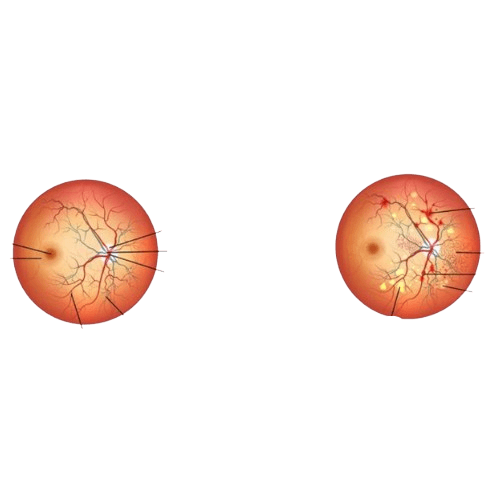
Overview
Diabetic Retinopathy is a complication of diabetes that damages the small blood vessels of the retina, leading to bleeding, swelling, and potentially vision loss if untreated.
Early detection through regular retinal screening is crucial because timely medical or surgical treatment — including laser therapy, intravitreal injections, or vitrectomy — can preserve or restore vision in many patients.
Overview And Clinical Background
How diabetes affects the retina
High blood sugar gradually injures retinal capillaries, causing leakage, ischemia, and abnormal vessel growth.
Disease severity ranges from mild non-proliferative changes to sight-threatening proliferative retinopathy.
- Pathology:: Microvascular damage leads to retinal hemorrhages, exudates, and capillary closure.
- Progression:: Without control, non-proliferative retinopathy can advance to proliferative disease with neovascularization.
- Impact:: Macular edema and hemorrhage are common causes of vision loss.
Symptoms, Signs And Presentation
Early stages are often asymptomatic; symptoms appear as the retina or macula is involved.
Timely screening is therefore essential to catch treatable changes before vision is affected.
- Blurred vision:: Often due to macular swelling (macular edema).
- Floaters or shadows:: From vitreous hemorrhage when fragile new vessels bleed.
- Sudden vision loss:: May indicate vitreous hemorrhage or retinal detachment and needs urgent care.
Diagnosis Methods And Investigations
Retinal imaging and functional tests
Diagnosis relies on clinical exam and targeted imaging to map damage and guide treatment.
Tests help determine whether laser, injections, or surgery is indicated.
- Fundus examination:: Direct ophthalmoscopy or slit-lamp biomicroscopy to view hemorrhages and exudates.
- Optical coherence tomography (OCT):: Quantifies macular edema and guides therapy.
- Fluorescein angiography:: Highlights leaking vessels and areas of ischemia for treatment planning.
Treatment Options And Surgical Techniques
Management combines systemic control with ocular treatments tailored to disease stage.
The goal is to stop progression and salvage central vision.
- Systemic optimization:: Tight glucose, blood pressure, and lipid control reduce progression risk.
- Anti-VEGF injections:: Medications injected into the eye reduce leakage and shrink abnormal vessels.
- Laser and vitrectomy:: Pan-retinal laser reduces neovascular drive; vitrectomy clears haemorrhage or relieves traction.
Recovery, Risks And Prognosis
Outcomes vary by stage and time to treatment.
Many patients stabilize or improve with modern therapies, but advanced disease may have limited recovery; ongoing diabetic care remains key.
Why Choose Us
CureU Healthcare offers integrated diabetes and retinal services — advanced imaging, experienced retinal surgeons, and prompt treatment pathways.
We prioritize vision preservation with clear, compassionate communication.
Conclusion
Diabetic Retinopathy is manageable when detected early.
Regular eye checks and timely treatment at CureU Healthcare drastically reduce the risk of permanent vision loss.