Overview
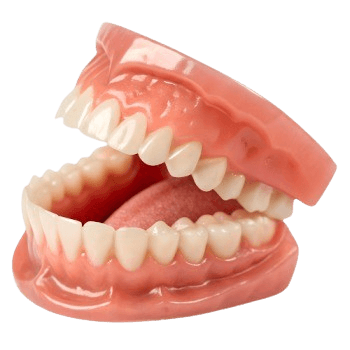
Dentures are removable prosthetic appliances that replace missing teeth and adjacent tissues, restoring function, esthetics, and facial support.
Treatment ranges from temporary immediate dentures inserted at the time of extraction to carefully crafted conventional dentures and implant-retained overdentures that dramatically improve stability.
Modern denture workflows use digital impressions, shade-matched teeth, and personalized occlusal design to deliver comfortable, natural-looking prostheses that integrate with remaining oral structures.
Overview And Clinical Background
Restoring Function And Form With Prosthetic Teeth
Dentures replace lost dentition to enable efficient chewing, clear speech, and to restore facial height and lip support.
Indications include complete edentulism, multiple missing teeth where fixed bridges are impractical, or transitional rehabilitation while planning implants.
Advances in materials and fabrication give modern dentures lifelike appearance and improved comfort compared with older designs.
- Types of dentures:: Complete (full-arch) dentures for patients missing all teeth in an arch, partial dentures for some missing teeth retained by clasps or precision attachments, and implant-supported overdentures providing enhanced retention and function.
- Materials and fit:: Acrylic bases with tooth-colored resin teeth are common; flexible materials and reinforced frameworks are used in select cases to improve comfort and durability, while precise impressions and jaw-recording techniques optimize fit.
- Goals:: Restore masticatory efficiency, improve speech, maintain vertical dimension of occlusion, and support facial tissues to improve aesthetics and confidence.
Symptoms, Signs And Presentation
Patients seek dentures due to missing teeth causing difficulty chewing, altered speech, or sunken facial appearance.
Others present with poorly fitting old dentures that cause sore spots, difficulty eating, or social discomfort.
A thorough clinical and prosthetic assessment identifies whether immediate, interim, conventional, or implant-supported prostheses are most appropriate.
- Common presentation:: Inability to chew comfortably, slipping or rocking prosthesis, and reduced confidence when smiling or speaking due to missing teeth.
- Functional concerns:: Altered bite, reduced vertical dimension leading to facial collapse, and speech changes such as lisping when anterior teeth are missing.
- Red flag:: Persistent mucosal ulceration, severe gagging, or weight loss from inability to chew require prompt prosthetic assessment and adjustments.
Diagnosis Methods And Investigations
Clinical Prosthetic Evaluation And Imaging
Successful denture therapy begins with careful clinical examination, diagnostic impressions, and often panoramic or CBCT imaging to assess bone contours for fit or implant planning.
Occlusal relationships, muscle tone, lip support, and aesthetic parameters are recorded to design a denture that balances function and appearance.
- Impressions and records:: Preliminary and final impressions, jaw relation records, and esthetic trial wax-ups establish tooth position, midline, occlusion, and lip support for precise fabrication.
- Radiographic assessment:: Panoramic imaging and, when implants are planned, CBCT imaging evaluate ridge anatomy, bone volume, and anatomic landmarks important for implant placement and denture retention.
- Medical review:: Assessment of systemic conditions (diabetes, xerostomia, neuromuscular disorders) and medications that affect mucosal health informs material choice and follow-up scheduling.
Treatment Options And Surgical Techniques
Denture therapy may be delivered as immediate, conventional, or implant-retained options.
Immediate dentures replace teeth at the time of extraction, while conventional dentures are fabricated after healing.
Implant-supported overdentures use two or more implants to anchor the prosthesis, markedly improving function and patient satisfaction.
- Conventional dentures:: Fabricated after ridge healing with multiple appointments for impressions, try-in, and final delivery—suitable for most edentulous patients seeking a removable solution.
- Immediate dentures:: Placed the same day as extractions to restore aesthetics and function immediately, with subsequent relining required as tissues heal and remodel.
- Implant-retained overdentures:: Strategically placed dental implants provide attachment points for overdentures, offering superior stability, chewing efficiency, and reduced bone loss compared with conventional dentures.
Recovery, Risks And Prognosis
Adaptation to new dentures includes an initial adjustment period for speech and mastication; sore spots are common and are managed with timely adjustments.
Risks include mucosal irritation, poor retention from ridge resorption, and the need for periodic relining or remaking as anatomy changes.
With proper fabrication, patient education, and maintenance, dentures restore quality of life and nutritional intake effectively.
- Adjustment period:: Patients typically adapt in a few weeks with incremental dietary progression from soft to firmer foods; frequent follow-up for adjustments reduces discomfort and improves function.
- Potential complications:: Sore spots, diminished retention over time due to bone resorption, and denture fracture—regular maintenance and relining extend prosthesis life.
- Long-term outlook:: Routine dental reviews, hygiene care, and timely relining or replacement every 5–10 years maintain prosthesis function and oral health.
Why Choose Us
CureU Healthcare blends prosthodontic expertise with digital workflows and implant solutions to deliver dentures that fit, function, and look natural.
We prioritize individualized esthetics, meticulous occlusal design, and a staged plan for conversion to implant-retained prostheses when appropriate.
- Customized approach:: Individualized tooth selection, occlusal schemes, and facially-driven design ensure the denture complements the patient’s appearance and functional needs.
- Technology-driven fabrication:: Digital impressions and CAD/CAM milled bases, combined with high-quality denture teeth, enhance fit and reduce chair time.
- Comprehensive follow-up:: Structured adjustment visits and maintenance protocols ensure comfort, prevent complications, and support long-term prosthesis success.
Conclusion
Dentures remain a reliable, often transformative solution for patients with partial or complete tooth loss.
With modern materials, digital planning, and implant options, CureU Healthcare provides prostheses that restore chewing, speech, and confidence with predictable, comfortable outcomes.
B.U.M.S, M.D. (NAT) | Reg No. 9153 | Ex. Secretary & Treasurer, N.I.M.A.
Qualified healthcare professional in Unani and Naturopathic medicine with deep expertise in traditional healthcare systems, patient-centered clinical care, and medical content review.