Overview
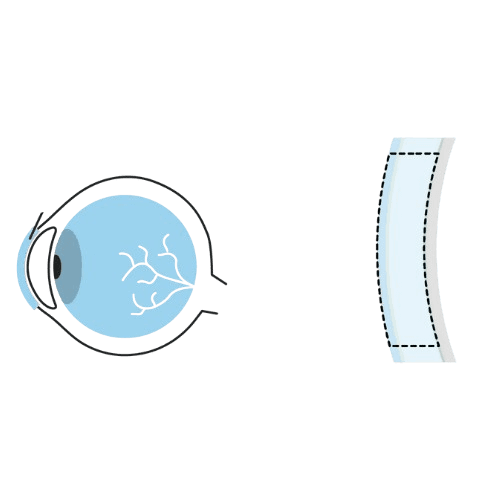
Deep Anterior Lamellar Keratoplasty (DALK) is a partial-thickness corneal transplant that replaces the diseased front layers of the cornea while keeping the healthy inner layer intact.
This technique offers better safety, faster recovery, and lower rejection rates compared to full corneal transplants.
It is especially useful in conditions like keratoconus and superficial corneal scars.
Overview And Clinical Background
Modern Corneal Layer Surgery
DALK focuses on selectively replacing only the damaged anterior corneal tissue.
By preserving the patient’s endothelium, it greatly minimizes complications and ensures long-term graft survival.
- Purpose:: Used for keratoconus, stromal dystrophies, and post-infectious scars.
- Technique:: Surgeon removes corneal stroma up to Descemet’s membrane before graft placement.
- Benefit:: Reduced graft rejection and stronger structural integrity.
Symptoms, Signs And Presentation
DALK is typically indicated when patients experience distorted vision due to thinning or scarring of the cornea.
Symptoms often progress gradually.
- Common symptom:: Progressive blurring and irregular astigmatism.
- Associated issue:: Light sensitivity and frequent change in glasses prescription.
- Red flag:: Rapid vision deterioration or corneal rupture.
Diagnosis Methods And Investigations
Corneal Imaging and Functional Testing
Evaluation includes advanced imaging to assess corneal shape, thickness, and suitability for partial transplantation.
Each test aids in selecting the ideal surgical technique.
- Corneal topography:: Shows thinning and cone-shaped bulging in keratoconus.
- Anterior segment OCT:: Helps visualize corneal layers in detail for surgical planning.
- Specular microscopy:: Confirms endothelial cell health for DALK eligibility.
Treatment Options And Surgical Techniques
DALK is performed under an operating microscope using precision instruments.
Various dissection techniques exist to separate healthy and diseased layers.
- Big bubble technique:: Uses air to detach corneal layers safely.
- Manual dissection:: Used when air separation is not possible.
- Suturing:: Fine nylon sutures secure the donor tissue with minimal surface irregularity.
Recovery, Risks And Prognosis
Healing takes several weeks, with gradual visual improvement.
Rejection is rare, and long-term vision stability is excellent compared to full transplants.
Why Choose Us
At CureU Healthcare, corneal surgeons perform DALK using modern microscopes and surgical precision tools.
Our outcomes show high graft clarity, rapid recovery, and personalized patient guidance.
Conclusion
Deep Anterior Lamellar Keratoplasty combines precision with safety.
With CureU Healthcare’s advanced techniques, patients enjoy restored vision and long-term comfort.