Overview
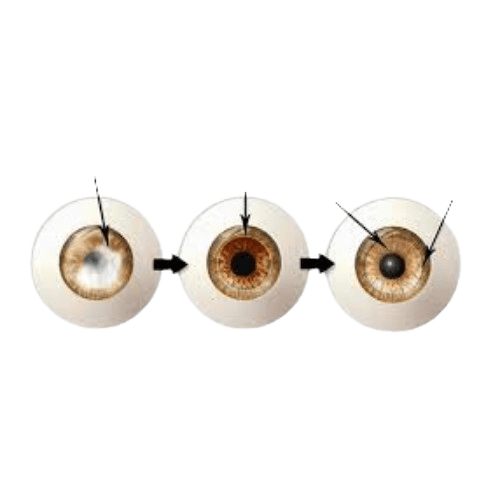
Corneal transplantation, or eye transplant, is a delicate surgical procedure that replaces the eye’s damaged or diseased cornea with healthy donor tissue.
It is performed when the cornea becomes cloudy or irregular, causing blurred or distorted vision that cannot be corrected with glasses or contact lenses.
The surgery can restore vision, relieve pain, and improve the appearance of a damaged cornea.
Overview And Clinical Background
Restoring Corneal Clarity
The cornea acts as the eye’s clear window, helping focus light accurately.
When it becomes scarred or swollen, a transplant replaces the defective tissue with donor cornea to restore transparency and function.
- Procedure Type:: Performed under local or general anesthesia depending on the case.
- Donor Tissue:: Healthy corneas are obtained from eye banks with strict medical screening.
- Outcome:: High success rate with marked improvement in vision quality.
Symptoms, Signs And Presentation
Patients needing corneal transplant usually present with reduced vision, glare, or corneal scarring.
Pain and tearing may accompany certain conditions.
- Common symptom:: Progressive blurring not corrected by glasses.
- Associated sign:: Corneal opacity or visible scarring.
- Red flag:: Severe pain with swelling or sudden vision loss.
Diagnosis Methods And Investigations
Preoperative Corneal Assessment
Before surgery, ophthalmologists conduct detailed imaging and microscopic evaluations to assess corneal thickness, shape, and clarity.
These findings guide surgical planning.
- Corneal topography:: Maps the corneal surface to detect irregularities.
- Pachymetry:: Measures corneal thickness and edema severity.
- Specular microscopy:: Evaluates endothelial cell health to select appropriate technique.
Treatment Options And Surgical Techniques
Corneal transplantation can involve full-thickness or partial-thickness grafts, depending on the layer affected.
Advances in lamellar surgery have improved outcomes and recovery times.
- Penetrating keratoplasty:: Replaces all layers of the cornea for severe scarring or infection.
- Endothelial keratoplasty (DSEK/DMEK):: Selective replacement of the inner corneal layer for faster healing.
- Suturing and care:: Fine stitches secure the graft, followed by medication to prevent rejection.
Recovery, Risks And Prognosis
Vision gradually improves over weeks to months.
Risks include graft rejection or infection but are minimized with careful monitoring.
Long-term outcomes are excellent with proper follow-up and medication adherence.
Why Choose Us
CureU Healthcare’s ophthalmic surgeons specialize in advanced corneal procedures, supported by world-class eye banking and post-transplant care.
Patients receive tailored guidance, ensuring clear vision and safe recovery.
Conclusion
Corneal transplantation restores not just sight but quality of life.
With modern techniques and expert care at CureU Healthcare, patients regain vision with comfort and confidence.