Overview
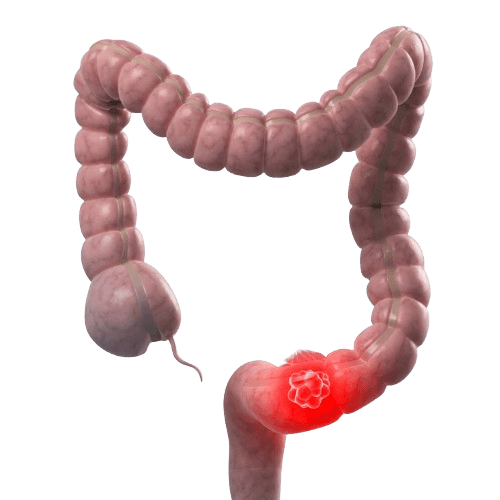
Colon cancer begins as a benign polyp that can transform into a malignant tumour over years.
Screening colonoscopy detects and removes precancerous polyps, while staging and multidisciplinary care guide curative surgery, chemotherapy, or combined therapies when needed.
Early-stage cases often have excellent outcomes; advanced disease benefits from individualized systemic and surgical strategies.
Overview And Clinical Background
Pathway from polyp to cancer
Most colon cancers develop slowly from adenomatous polyps in the large intestine.
Risk increases with age, family history, inflammatory bowel disease, and certain lifestyle factors.
- Pathogenesis: Progression from adenoma to carcinoma driven by stepwise genetic changes.
- Risk factors: Age, family history, smoking, obesity, low-fiber diet, and IBD.
- Screening importance: Colonoscopy detects and removes precancerous polyps before they become cancer.
Symptoms, Signs And Presentation
Early colon cancer may be silent.
Symptoms usually appear once the tumour affects bowel function or bleeds.
- Bleeding or anemia: Occult or visible blood in stool leading to iron-deficiency anemia.
- Bowel habit change: Persistent constipation, diarrhea, or altered stool calibre.
- Obstructive signs: Crampy abdominal pain, bloating, or blockage in advanced cases.
Diagnosis Methods And Investigations
Imaging, endoscopy and pathology
Diagnosis requires endoscopic visualisation and tissue biopsy, followed by imaging to stage the disease.
Accurate staging is essential to plan surgery and adjuvant therapy.
- Colonoscopy and biopsy: Direct visualisation with histology to confirm malignancy.
- Cross-sectional imaging: CT chest/abdomen/pelvis or MRI for local and distant staging.
- Tumour markers: CEA level for baseline and follow-up monitoring.
Treatment Options And Surgical Techniques
Curative treatment for localized colon cancer is surgical resection with adequate margins and lymph node removal.
Adjuvant chemotherapy reduces recurrence risk for selected stages.
- Surgical resection: Segmental colectomy (open or laparoscopic) with lymphadenectomy.
- Adjuvant therapy: Systemic chemotherapy for stage III and high-risk stage II disease.
- Palliative options: Stenting, diverting stoma or systemic therapy for unresectable or metastatic disease.
Recovery, Risks And Prognosis
Recovery depends on surgery type; most patients resume normal activity within weeks.
Risks include infection, anastomotic leak, and bowel obstruction; prognosis relates to stage at diagnosis with early-stage disease often curable.
Why Choose Us
CureU Healthcare provides multidisciplinary colorectal care — experienced surgeons, precise pathology, modern imaging, and coordinated chemotherapy.
We personalise plans, offer minimally invasive techniques, and prioritise fast recovery and long-term surveillance.
Conclusion
Colon cancer is highly treatable when caught early.
Regular screening, prompt surgical management, and tailored systemic therapy at an experienced centre deliver the best outcomes.

B.U.M.S, M.D. (NAT) | Reg No. 9153 | Ex. Secretary & Treasurer, N.I.M.A.
Qualified healthcare professional in Unani and Naturopathic medicine with deep expertise in traditional healthcare systems, patient-centered clinical care, and medical content review.