Overview
Cochlear Implantation is a highly advanced surgical procedure designed to restore the perception of sound in individuals with severe to profound sensorineural hearing loss who do not benefit from hearing aids.
Unlike hearing aids, which amplify sound, a cochlear implant bypasses damaged parts of the inner ear and directly stimulates the auditory nerve, allowing sound signals to reach the brain.
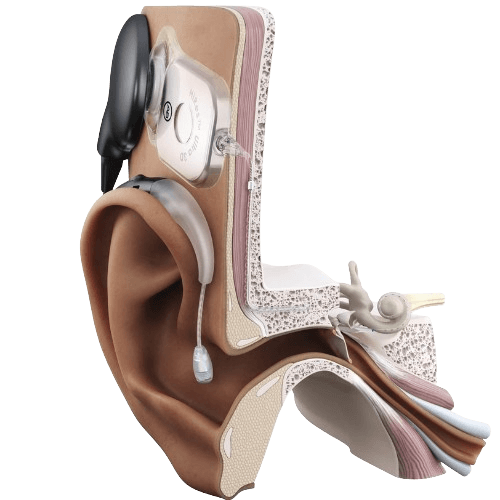
The procedure involves implanting a small electronic device under the skin behind the ear, with electrodes placed inside the cochlea (inner ear). An external processor captures sound, converts it into digital signals, and transmits them to the implanted device.
Cochlear implantation can significantly improve speech understanding, communication ability, and quality of life for both children and adults, especially when combined with auditory training and rehabilitation therapy.
What is Cochlear Implantation?
Understanding the Basics of Cochlear Implants
Cochlear Implantation is a surgical intervention used to treat severe hearing loss when conventional hearing aids are no longer effective. The cochlear implant system consists of two main components: an internal implant placed surgically under the skin and within the inner ear, and an external processor worn behind the ear. Together, these components convert sound into electrical signals that directly stimulate the auditory nerve, allowing the brain to perceive sound.
This technology does not restore normal hearing but provides a functional sense of sound that helps individuals understand speech, recognize environmental sounds, and improve communication skills.
- Internal Implant: A surgically placed device containing a receiver and electrode array that stimulates the cochlear nerve directly.
- External Processor: A wearable sound processor that captures sound and converts it into digital signals transmitted to the implant.
- Direct Nerve Stimulation: Bypasses damaged hair cells in the cochlea and sends electrical impulses directly to the auditory nerve.
- Hearing Rehabilitation: Post-surgery auditory training is essential to help the brain adapt to new sound signals and improve speech understanding.
Indications and Eligibility
Who Needs Cochlear Implant Surgery?
Cochlear implantation is recommended for individuals with severe to profound sensorineural hearing loss who receive limited or no benefit from hearing aids. Candidates include both children and adults after comprehensive audiological and medical evaluation.
Early implantation in children is especially beneficial for speech and language development, while adults can regain communication abilities and social confidence.
- Severe Hearing Loss: Patients with bilateral severe or profound sensorineural hearing loss who cannot understand speech with hearing aids.
- Congenital Deafness: Children born with profound hearing loss who are candidates for early implantation to support speech development.
- Progressive Hearing Loss: Adults with worsening hearing loss despite optimal hearing aid use.
- Post-Lingual Deafness: Individuals who lost hearing after developing speech and language skills.
Procedure and Recovery
How Cochlear Implant Surgery is Performed
Cochlear implantation is typically performed under general anesthesia and takes around 2 to 4 hours. The surgeon makes a small incision behind the ear, places the implant under the skin, and inserts the electrode array into the cochlea.
After surgery, the implant is activated a few weeks later, followed by programming sessions and auditory rehabilitation therapy. Recovery is generally smooth, with most patients resuming daily activities within a few days.
- Surgical Implantation: Placement of the internal receiver and electrode array through a small incision behind the ear.
- Healing Period: The surgical site heals over 2–4 weeks before the device is activated.
- Device Activation: The external processor is fitted and programmed by an audiologist to optimize hearing performance.
- Rehabilitation Therapy: Ongoing speech and hearing therapy to help the brain interpret new sound signals effectively.
Why Choose CureU Healthcare
Advanced Cochlear Implant Care with a Patient- First Approach, description: CureU Healthcare offers comprehensive cochlear implant care with a multidisciplinary team of experienced ENT surgeons, audiologists, and speech therapists.We follow global clinical protocols, use FDA - approved implant systems, and provide personalized rehabilitation programs tailored to each patient’s needs.- brOur patient - centered approach ensures detailed counseling, transparent cost discussions, and long - term follow - up support to maximize hearing outcomes and improve quality of life.We prioritize safety, comfort, and evidence - based clinical excellence throughout the treatment journey.
- Expert ENT Surgeons: Highly trained cochlear implant surgeons with extensive experience in pediatric and adult implantation.
- Advanced Technology: Use of internationally approved cochlear implant systems with the latest digital sound processing features.
- Comprehensive Rehabilitation: Integrated speech therapy and auditory training programs to ensure optimal hearing outcomes.
- Long - Term Follow- Up: Regular device programming, performance monitoring, and lifelong hearing support services.
Conclusion
Cochlear Implantation is a transformative procedure for individuals with severe hearing loss, offering a new pathway to sound perception, communication, and social integration.- brWith proper candidate selection, skilled surgical technique, and dedicated rehabilitation, cochlear implants can significantly enhance speech understanding and overall quality of life.At CureU Healthcare, we are committed to delivering world - class cochlear implant care with a compassionate, patient - focused approach, ensuring every individual receives the support needed to rediscover the world of sound.