Overview
Coarctation stenting is an advanced, minimally invasive procedure used to treat coarctation of the aorta, a congenital condition where the aorta (the main artery that carries blood from the heart to the body) becomes narrowed. This narrowing can restrict blood flow, leading to high blood pressure, heart strain, and potential complications if left untreated. With the advent of stent technology, coarctation stenting has emerged as a safe and effective alternative to open-heart surgery, offering quicker recovery and excellent long-term outcomes.
What is Coarctation of the Aorta?
Coarctation of the aorta (CoA) is a congenital heart defect that results in a narrowing of the aorta, usually located after the arteries that supply blood to the head and arms. Because of this narrowing, the heart must pump harder to push blood through, which can cause:
- High blood pressure in the upper body
- Poor circulation in the lower body
- Increased risk of heart failure, stroke, or aneurysm if untreated
Why is Coarctation Stenting Performed?
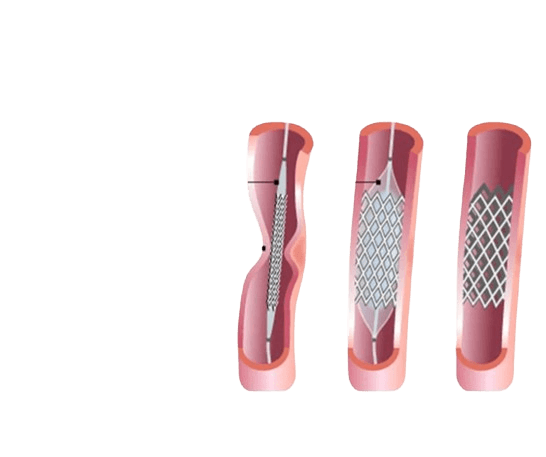
Traditionally, coarctation was treated with open-heart surgery. However, surgical repair involves larger incisions, longer recovery times, and higher risks. In contrast, stenting provides a less invasive solution by widening the narrowed section of the aorta using a metallic stent.
The main goals of coarctation stenting are to:
- Restore normal blood flow through the aorta
- Reduce high blood pressure in the upper body
- Improve overall heart function
- Prevent long-term complications such as stroke, aneurysm, or heart damage
How is Coarctation Stenting Performed?
The procedure is performed in a cardiac catheterization lab under local or general anesthesia.
- Catheter Insertion: A thin catheter is inserted, usually through the femoral artery in the groin.
- Balloon Angioplasty: A small balloon is inflated at the site of narrowing to widen the aorta.
- Stent Placement: A metallic stent (mesh tube) is placed in the narrowed area to keep it open.
- Confirmation: Imaging is used to ensure proper blood flow and stent positioning.
Benefits of Coarctation Stenting
Compared to surgery, coarctation stenting offers numerous benefits, including:
- Minimally invasive with no large surgical incision
- Shorter hospital stay and faster recovery
- Lower risk of complications
- Long-lasting results with improved quality of life
- Significant reduction in blood pressure
Risks and Possible Complications
While generally safe, coarctation stenting may carry some risks, such as:
- Injury to the artery at the catheter site
- Stent migration or re-narrowing (restenosis)
- Risk of aneurysm formation at the stent site
- Rare chances of blood clot or infection
Recovery and Follow-Up Care
After the procedure, patients are advised to:
- Avoid strenuous activities for a few weeks
- Take prescribed medications such as blood thinners
- Undergo regular follow-up imaging (echocardiogram, CT scan, or MRI)
- Monitor blood pressure closely
Who is a Candidate for Coarctation Stenting?
Coarctation stenting is typically recommended for:
- Adolescents and adults with a narrowed aorta
- Patients with recurrent narrowing after previous surgery
- Those who prefer a less invasive alternative to surgery
Conclusion
Coarctation stenting represents a modern, safe, and highly effective treatment for coarctation of the aorta. By restoring normal blood flow and reducing complications, it offers patients an improved quality of life and long-term health benefits. At CureU Healthcare, we connect patients with leading cardiovascular specialists and state-of-the-art hospitals to ensure the best possible outcomes for congenital heart conditions like aortic coarctation.