Overview
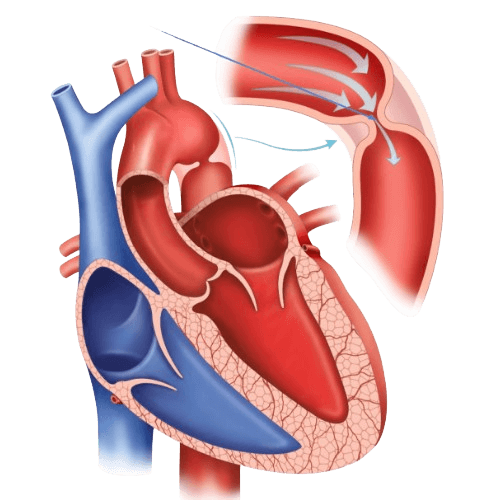
Coarctation of the Aorta (CoA) is a congenital condition where a segment of the aorta is narrowed, obstructing blood flow from the heart to the body.
Surgery involves removing or widening the narrowed section to normalize circulation.
Early correction is critical to prevent hypertension and heart failure.
Overview And Clinical Background
Correcting congenital narrowing
CoA is a developmental defect often detected in infancy or early childhood.
Untreated, it leads to upper body hypertension and lower body underperfusion.
- Anatomical site:: Typically occurs near the ductus arteriosus in the thoracic aorta.
- Pathophysiology:: Increased pressure above the narrowing causes strain on the heart and arteries.
- Prevalence:: Accounts for about 5–8% of congenital heart diseases.
Symptoms, Signs And Presentation
Children may present with poor growth, fatigue, or heart failure signs.
Adults may have high blood pressure or leg weakness.
- Infants:: Rapid breathing, irritability, or poor feeding.
- Older children:: Headaches, nosebleeds, or muscle cramps in legs.
- Adults:: Uncontrolled hypertension and weak lower pulses.
Diagnosis Methods And Investigations
Imaging and functional evaluation
Diagnosis relies on echocardiography and imaging to assess narrowing severity and collateral circulation.
- Echocardiogram:: Identifies aortic narrowing and heart strain.
- CT or MRI angiography:: Provides detailed structural visualization for surgical planning.
- Blood pressure studies:: Show elevated upper limb pressure and reduced leg pressure.
Treatment Options And Surgical Techniques
Surgery or balloon angioplasty is performed to widen or bypass the narrowed segment.
- Resection with anastomosis:: The narrowed segment is removed, and the healthy ends are reconnected.
- Patch aortoplasty:: A patch enlarges the constricted area to restore normal flow.
- Balloon angioplasty/stenting:: Used for recurrence or less severe cases as a minimally invasive alternative.
Recovery, Risks And Prognosis
Post-surgery, blood pressure gradually normalizes.
Long-term follow-up is essential to monitor for recurrence or aneurysm formation at the repair site.
Why Choose Us
CureU Healthcare’s vascular and cardiac surgery teams collaborate using advanced imaging, pediatric expertise, and precise repair techniques for durable CoA correction.
Conclusion
Coarctation of the Aorta Surgery restores natural circulation.
With CureU Healthcare’s specialized team, patients achieve long-term relief from hypertension and improved cardiac health.


