Overview
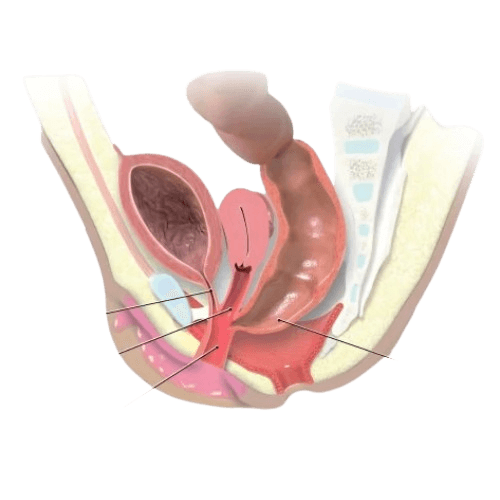
Cloacal malformation surgery treats a rare congenital condition in female infants where the urinary, genital, and intestinal tracts form a single opening.
This surgery separates and reconstructs each system to restore normal anatomy and function.
It is a highly specialized procedure performed by expert pediatric surgeons to ensure long-term continence, fertility, and quality of life.
Overview And Clinical Background
Understanding Cloacal Malformation
Cloacal malformations occur early in fetal development when the rectum, vagina, and urinary tract fail to separate.
The result is a single perineal opening.
It often requires staged surgical repair after detailed imaging and evaluation.
- Incidence:: Occurs in roughly 1 in 50,000 female births.
- Often associated with urinary or spinal anomalies.
- Goal:: Restore anatomy and function while preserving continence and fertility potential.
Symptoms, Signs And Presentation
Newborns typically present with absence of normal anal and vaginal openings.
Abdominal distension or difficulty passing urine and stool are early signs.
Some may have associated kidney or spinal issues.
- Common sign:: Single perineal opening instead of separate ones.
- Swollen abdomen due to trapped stool or urine.
- Red flag:: Urinary retention or infection requiring urgent evaluation.
Diagnosis Methods And Investigations
Imaging And Endoscopic Evaluation
Diagnosis is based on clinical examination supported by imaging to map the anatomy.
Contrast studies and endoscopy help determine the extent of fusion and guide surgical planning.
- Ultrasound:: Evaluates kidneys and urinary system for associated anomalies.
- MRI:: Defines pelvic anatomy before reconstructive surgery.
- Cystoscopy and vaginoscopy visualize internal channels.
Treatment Options And Surgical Techniques
Treatment usually involves staged surgery.
Initially, a colostomy may be created to divert stool safely.
Later, a definitive reconstruction separates the rectum, vagina, and urethra with precision under magnification.
Postoperative care focuses on urinary and bowel control.
- Initial step:: Colostomy to relieve pressure and allow healing.
- Definitive repair:: Posterior sagittal approach or combined abdominal-perineal surgery.
- Pelvic floor rehabilitation and follow-up to monitor function.
Recovery, Risks And Prognosis
Children usually recover well, though multiple follow-ups are required through childhood.
Risks include infection, stenosis, or urinary issues.
With proper reconstruction, most children achieve good continence and quality of life.
Why Choose Us
CureU Healthcare’s pediatric surgery team specializes in complex pelvic reconstructions.
We ensure precise surgical repair, advanced imaging, and long-term follow-up so every child grows up confident and healthy.
Conclusion
Cloacal malformation surgery restores both function and dignity.
At CureU Healthcare, each repair is crafted with precision, patience, and heart.


