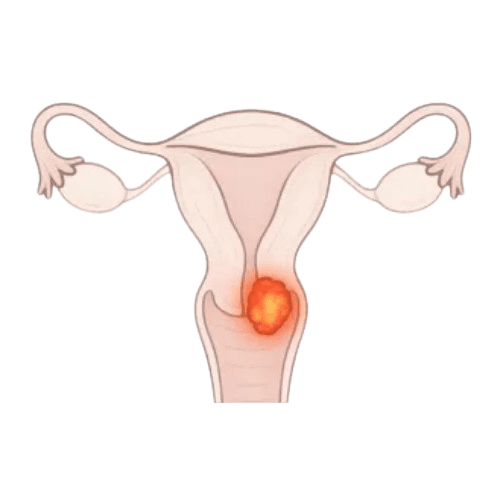
Overview
Cervical Cancer arises in the lower part of the uterus (cervix) and is primarily linked to persistent HPV infection.
Early screening through Pap smears and HPV tests helps detect precancerous changes before they progress.
Overview And Clinical Background
Cervical Cancer is a preventable malignancy with regular screening and vaccination.
Most cases are caused by high-risk HPV strains.
- Primary cause:: Persistent infection with HPV types 16 and 18.
- Prevention:: HPV vaccination and routine screening lower risk significantly.
- Common in women aged 30–50 years in low-screening populations.
Symptoms, Signs And Presentation
Early stages are often silent, making screening essential.
Advanced disease presents with more noticeable symptoms.
- Common symptom:: Abnormal vaginal bleeding or discharge.
- Pelvic pain or pain during intercourse.
- Red flag:: Postmenopausal bleeding or foul-smelling discharge.
Diagnosis Methods And Investigations
Cytology and Biopsy
Diagnosis relies on cytological screening and histopathologic confirmation.
Imaging helps in staging the disease.
- Imaging:: MRI and CT scans assess local and distant spread.
- Lab tests:: Pap smear, HPV DNA testing, and biopsy.
- Colposcopy identifies suspicious lesions visually.
Treatment Options And Surgical Techniques
Treatment is tailored to cancer stage and patient health.
Surgery, radiation, and chemotherapy are key components.
- Early stage:: Treated with conization or hysterectomy.
- Advanced stage:: Requires radiation with or without chemotherapy.
- Targeted or immunotherapy options available in resistant cases.
Recovery, Risks And Prognosis
Prognosis is excellent when detected early.
Regular follow-up ensures no recurrence and long-term survival.
Why Choose Us
CureU Healthcare offers advanced cancer screening, minimally invasive surgery, and expert oncologists for holistic care.
Conclusion
Cervical Cancer prevention begins with awareness and timely screening.
CureU Healthcare ensures personalized and effective treatment.