Overview
Balloon Angioplasty is a procedure used to open up narrowed or blocked arteries, usually caused by atherosclerosis.
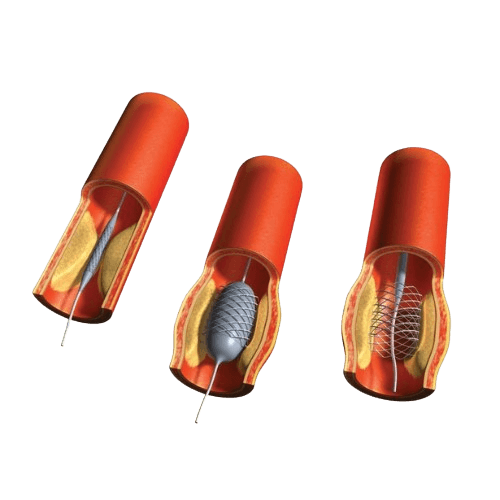
During the procedure, a catheter with a small balloon at its tip is guided to the blockage site and inflated to compress plaque and restore blood flow.
It’s often combined with stent placement for long-term artery support.
Overview And Clinical Background
Restoring blood flow through dilation
Balloon Angioplasty improves circulation in coronary, renal, carotid, or peripheral arteries.
It reduces ischemic symptoms and may prevent heart attack or limb loss.
- Primary indication:: Used for patients with symptomatic arterial narrowing or claudication.
- Procedure type:: Endovascular—performed through small punctures rather than open surgery.
- Goal:: To re-establish normal blood flow and relieve ischemic pain.
Symptoms, Signs And Presentation
Candidates often have pain, weakness, or poor circulation due to arterial blockages.
The procedure targets arteries supplying the heart, kidneys, or legs.
- Coronary blockage:: Chest pain and shortness of breath.
- Peripheral blockage:: Leg cramps and fatigue during walking.
- Renal artery disease:: High blood pressure resistant to medication.
Diagnosis Methods And Investigations
Preoperative vascular assessment
Detailed imaging defines the exact site and severity of blockage before intervention.
- Angiography:: X-ray visualization using contrast dye to map arterial narrowing.
- CT angiogram:: 3D imaging for treatment planning.
- Doppler ultrasound:: Evaluates flow velocity and stenosis degree.
Treatment Options And Surgical Techniques
Performed under local anesthesia, a catheter is threaded into the artery and the balloon inflated to compress plaque.
A stent may then be placed to prevent re-narrowing.
- Balloon dilation:: Temporary inflation widens the artery and restores lumen size.
- Stent placement:: A metallic mesh tube keeps the artery open permanently.
- Post-procedure care:: Antiplatelet therapy and risk-factor control are essential.
Recovery, Risks And Prognosis
Most patients recover within a day or two.
Risks include artery re-narrowing, bleeding, or allergic reaction to dye.
Long-term outcomes are excellent with medication and lifestyle control.
Why Choose Us
CureU Healthcare offers advanced angioplasty facilities with high-precision imaging and expert interventionists.
Our team minimizes risk and ensures durable, long-term arterial patency.
Conclusion
Balloon Angioplasty provides quick relief from blocked arteries.
With CureU Healthcare’s modern endovascular technology, recovery is fast and outcomes are reliable.


