Overview
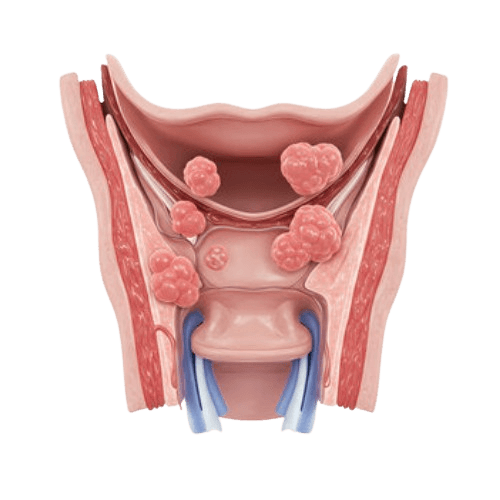
Arytenoidectomy is a specialized surgical procedure performed to improve airway patency by removing part or all of the arytenoid cartilage in the larynx. This cartilage plays a key role in vocal cord movement, and its removal helps widen the airway in patients experiencing breathing difficulties. The procedure is commonly indicated in cases of bilateral vocal cord paralysis or severe airway obstruction, allowing better airflow while maintaining essential voice and swallowing functions.
Key Clinical Highlights
- Airway Expansion: Widens the airway by removing obstructive laryngeal cartilage.
- Endoscopic Precision: Performed using minimally invasive endoscopic and laser techniques.
- Function Preservation: Balances breathing improvement while maintaining voice and swallowing.
When to Consider
Arytenoidectomy is considered when patients experience persistent breathing difficulty due to vocal cord immobility, especially in bilateral vocal cord paralysis. It is also recommended in cases where conservative treatments fail or when long term airway support is needed without permanent tracheostomy.
Relieve Airway Obstruction
The procedure restores adequate airflow in patients with compromised vocal cord movement.
- Improve Breathing: Creates a wider airway for better oxygen flow.
- Avoid Tracheostomy: Reduces need for long term external airway support.
- Functional Balance: Maintains essential voice and swallowing ability.
Symptoms and Indications
- Breathing Difficulty: Shortness of breath due to narrowed airway.
- Stridor: Noisy breathing caused by airway obstruction.
- Voice Changes: Hoarseness or weak voice from vocal cord issues.
- Airway Blockage: Sensation of restricted airflow during breathing.
Types of Arytenoidectomy
Partial Arytenoidectomy
Removes part of the arytenoid cartilage to improve airflow while preserving voice.
- Laser Partial Removal: Uses laser to precisely excise part of the cartilage.
- Endoscopic Partial Resection: Performed through endoscopic instruments without external incision.
Total Arytenoidectomy
Complete removal of arytenoid cartilage for severe airway obstruction.
- Complete Endoscopic Removal: Used in advanced cases requiring maximum airway widening.
Pre-Procedure Preparation
- Laryngoscopy: Detailed airway examination before surgery.
- Imaging: CT scan to assess airway structure.
- Medication Review: Adjust medications before surgery.
- Fasting: Avoid food prior to anesthesia.
Treatment Stages
- Consultation (Day 1): Voice and airway evaluation
- Admission (Week 1): Preoperative tests and planning
- Surgery (Week 2): Endoscopic arytenoidectomy
- Recovery (1-2 Weeks): Airway monitoring and discharge
Recovery Guidelines
- Voice Rest: Limit speaking to allow healing.
- Hydration: Maintain fluid intake for throat comfort.
- Avoid Irritants: Stay away from smoke and pollutants.
- Follow Up: Regular ENT visits to monitor airway.
Life After Treatment
- Improved breathing and airflow.
- Reduced airway obstruction symptoms.
- Enhanced quality of life without tracheostomy.
Arytenoidectomy restores breathing freedom while preserving essential laryngeal function.
Potential Risks
- Voice Weakness: Changes in voice quality may occur after surgery.
- Aspiration Risk: Swallowing difficulty in rare cases.
- Airway Swelling: Temporary swelling may affect breathing post surgery.
Cost Estimation in India
Estimated procedure package range: $4,000 to $9,000 USD.
Package Inclusions:
- Pre-surgery evaluation
- Endoscopic surgery
- Hospital stay
- Surgeon fees
Global Cost Comparison
- USA: $25,000 USD
- UK: $18,000 USD
- Germany: $15,000 USD
- Thailand: $9,000 USD
- India: $6,000 USD