Overview
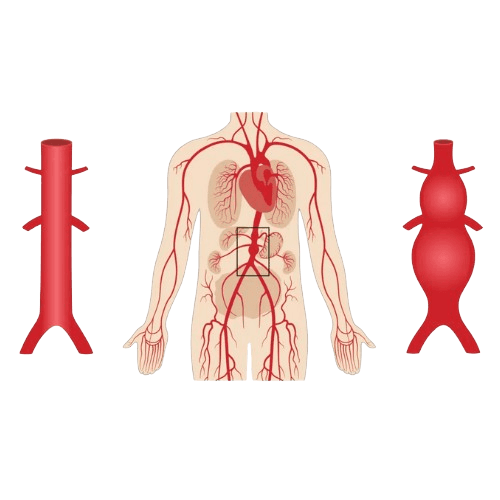
Arterial aneurysms occur when a section of an artery weakens and balloons outward due to chronic pressure on the vessel wall.
These aneurysms can form in various arteries including the femoral, popliteal, carotid, or visceral arteries.
Early detection and management are crucial, as rupture or clot formation can lead to life-threatening bleeding or ischemia.
Overview And Clinical Background
Understanding arterial dilation
An aneurysm forms when the arterial wall loses its structural integrity.
Risk factors include atherosclerosis, high blood pressure, smoking, and genetic predisposition.
- Common sites:: Popliteal, femoral, carotid, and visceral arteries are often affected.
- Aneurysm wall changes:: Degeneration of elastin and collagen layers weakens the arterial wall.
- Prevalence:: Occurs more frequently in older men and those with peripheral vascular disease.
Symptoms, Signs And Presentation
Many aneurysms are asymptomatic but can cause localized pain, pulsatile swelling, or embolic complications.
If rupture occurs, it presents as sudden, severe pain and shock.
- Silent cases:: Detected during imaging for unrelated issues.
- Pain or mass:: Gradual swelling or tenderness near the affected artery.
- Complications:: Thrombosis or embolization can cause distal ischemia or gangrene.
Diagnosis Methods And Investigations
Noninvasive imaging for detection
Imaging helps identify aneurysm size, location, and rupture risk, guiding surgical planning.
- Doppler ultrasound:: Effective for peripheral aneurysms, showing size and flow turbulence.
- CT angiography:: Provides detailed anatomical mapping before repair.
- MRI angiography:: Used when contrast allergy or renal issues prevent CT usage.
Treatment Options And Surgical Techniques
Management depends on aneurysm size, symptoms, and risk of rupture.
Both open surgery and endovascular repair are used.
- Observation:: Small, stable aneurysms are monitored with regular imaging.
- Open repair:: Involves replacing the diseased artery with a graft.
- Endovascular stenting:: A stent graft reinforces the arterial wall through a minimally invasive approach.
Recovery, Risks And Prognosis
Recovery depends on aneurysm site and treatment method.
Ruptured aneurysms have a high mortality rate, while elective repair outcomes are excellent with modern techniques.
Why Choose Us
CureU Healthcare’s vascular unit offers advanced aneurysm screening, precise imaging, and minimally invasive stenting solutions tailored for each artery.
Our specialists focus on preventing rupture and restoring safe blood flow.
Conclusion
Arterial aneurysms are silent but serious.
With early diagnosis and expert care at CureU Healthcare, patients can prevent rupture and maintain vascular integrity.


