Overview
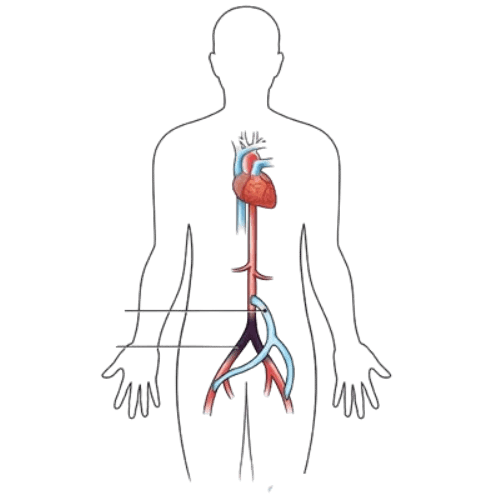
Aortofemoral Bypass Surgery is a major vascular procedure designed to restore circulation to the lower limbs in patients with blocked or narrowed aortoiliac arteries.
Using a synthetic graft, surgeons create a bypass from the abdominal aorta to the femoral arteries, improving blood flow, reducing pain, and preventing limb loss in severe peripheral artery disease.
Overview And Clinical Background
Bypassing blocked major arteries
Peripheral artery disease affecting the aortoiliac region can severely restrict leg blood supply.
Aortofemoral bypass reroutes blood past the obstruction using durable grafts for long-term relief.
- Primary goal:: Re-establish blood flow to lower limbs when endovascular options fail or are unsuitable.
- Common indication:: Advanced aortoiliac occlusive disease causing claudication or critical limb ischemia.
- Graft material:: Usually made from Dacron or PTFE for strength and longevity.
Symptoms, Signs And Presentation
Patients often present with severe leg pain, ulcers, or gangrene.
The surgery is reserved for those with lifestyle-limiting or limb-threatening ischemia.
- Claudication:: Cramping leg pain while walking that improves with rest.
- Rest pain:: Continuous foot pain at rest, especially at night, due to inadequate blood flow.
- Tissue loss:: Ulcers or gangrene in advanced stages requiring urgent revascularization.
Diagnosis Methods And Investigations
Assessing the extent of arterial blockage
Detailed imaging determines where the arteries are blocked and whether bypass is the best option.
Preoperative evaluation ensures optimal graft planning.
- CT angiography:: Provides a detailed vascular map for surgical planning.
- Doppler ultrasound:: Evaluates blood flow and identifies obstruction sites.
- Ankle-brachial index:: Simple bedside test quantifying severity of limb ischemia.
Treatment Options And Surgical Techniques
The operation involves attaching a synthetic graft from the aorta to both femoral arteries to bypass the diseased segment.
It is highly effective for long-term symptom relief.
- Surgical approach:: Midline abdominal incision provides access to the aorta for graft placement.
- Bypass creation:: Graft limbs are tunneled to each femoral artery and sutured securely.
- Postoperative care:: Includes anticoagulation, wound care, and walking therapy to maintain graft patency.
Recovery, Risks And Prognosis
Recovery involves hospital stay for 5–7 days with progressive mobilization.
Risks include infection, graft thrombosis, or bleeding, but long-term success rates exceed 80%.
Why Choose Us
CureU Healthcare’s vascular team specializes in advanced revascularization, combining surgical precision with meticulous postoperative care.
Our outcomes emphasize limb preservation and improved mobility.
Conclusion
Aortofemoral Bypass Surgery restores life and limb function.
With expert vascular care at CureU Healthcare, patients regain comfort, walking ability, and long-term circulatory health.


